
A high converting Kickstarter video script in 2025 is short, clear, and built around a simple structure: grab attention in the first 3 to 5 seconds, show the problem and context fast, demonstrate the product solving that problem, add proof and social validation, then close with a direct call to back now. Most campaigns do best with a core video under 2 minutes that is written for performance, not for "telling everything".
Quick overview
What is a good structure for a Kickstarter video script
At BoostYourCampaign, we use a five part structure for most Kickstarter video scripts:
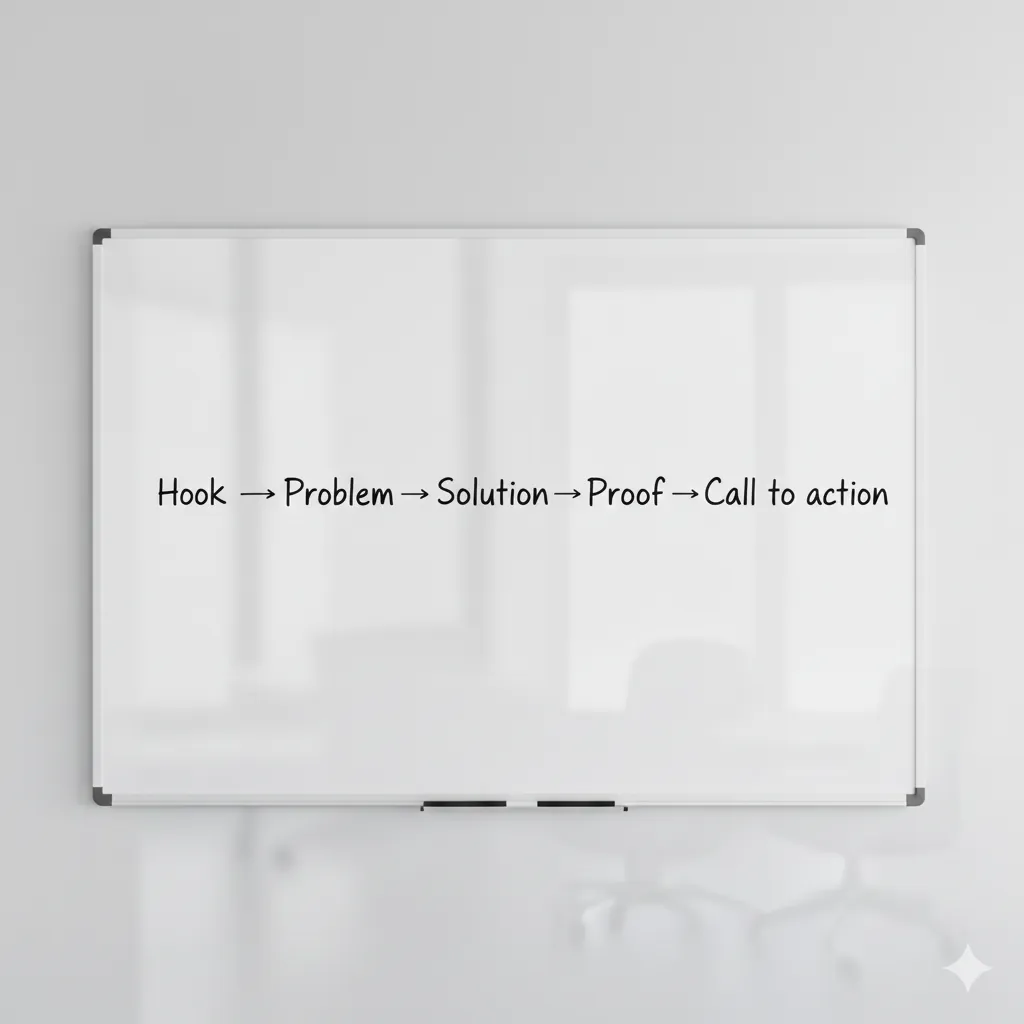
- Hook
- Problem and context
- Solution and payoff
- Proof and social validation
- Call to action and next step
We adjust pacing and tone by category, but this is the skeleton we usually start from.
Hook: the first 3 to 5 seconds
The first 3 to 5 seconds decide if viewers stay or scroll. A good hook can be:
- A strong visual that shows the product in use in a surprising way
- A bold, specific claim ("Pack for a 7 day trip in one backpack")
- A direct question that matches the viewer's problem ("Still fighting with tangled charging cables?")
For many projects we combine hook and product in the same moment: a clean shot of the product doing something useful, paired with one clear line of copy.
Problem and context
After the hook, we quickly show the situation your backer recognises:
- What daily friction are they tired of
- What they have already tried
- Why current options are not ideal
This part should be specific and visual. One or two situations are enough:
- The crowded desk full of cables
- The overfilled suitcase at the airport
- The family trying to sleep while light leaks in through a curtain
We avoid vague "modern life is busy" statements. Instead we show one clear moment the backer has lived through.
Solution: product and payoff
Now we bring the product in as the clean solution.
Here the script should do three jobs:
- Name the product and category clearly
- Show the core mechanic or innovation in a simple way
- Translate features into one or two main benefits
A useful pattern is:
"This is [product name], a [short category] that [core benefit]."
Show the product solving the earlier problem in real use.
Call out one to three key benefits that matter most (space saved, time saved, money saved, comfort).
You do not need every feature in the main video. Extra modes, colours, and edge cases can go in the page copy, GIFs, and deep dive section.
Proof and social validation
Backers are used to big claims. Proof answers the silent question: "Will this actually work for me?"
Common forms of proof in a Kickstarter video script:
- Short founder credibility line ("I have spent ten years designing bags for photographers.")
- Quick user or tester reactions (real people using the product, not stock models)
- Showing prototypes, stress tests, or behind the scenes engineering
- Logos of press outlets if they are real and relevant
This does not need a long monologue. Often two or three short lines and a few precise shots are enough.
Call to action and urgency
The last part of the script tells people what to do, and why now.
Typical elements:
- Direct ask: "Back us on Kickstarter"
- What they get: "Save up to 35 percent vs future retail, and be in the first batch."
- Light urgency: "Early bird rewards are limited" or "First production run is capped."
In 2025, simple, honest urgency works better than forced hype. The script should match the reality of your offer.
Core elements of a high converting Kickstarter video script
Across categories, most strong scripts include:
- One core promise
- One primary use case
- One main benefit with two or three supporting proof points
- A clear, honest explanation of what stage you are at (prototype, tooling, production)
- A direct explanation of why you are on Kickstarter and how you will use the funds
Everything else is optional.
How we write Kickstarter video scripts at BoostYourCampaign
Because we run both the marketing and the production, we always write the script with performance in mind, not just storytelling.
Our typical process:
Strategy and angle
- We start from your positioning, margins, and funding goal.
- We decide what the main promise will be and which audience we are talking to first.
- We review early ad data if we have it, so hooks and claims match what is already converting.
Script outline
- We map the five part structure specific to your product.
- We decide what must appear on camera (demo, close ups, founder) and what belongs in voice over or graphics.
- We align the script with the rest of your funnel, including the landing page and campaign story.
Full script and storyboard
- We write the full script with timing estimates.
- We create a simple storyboard so you see what each line looks like on screen.
- We plan where on screen text, captions, and UI overlays should appear to support comprehension.

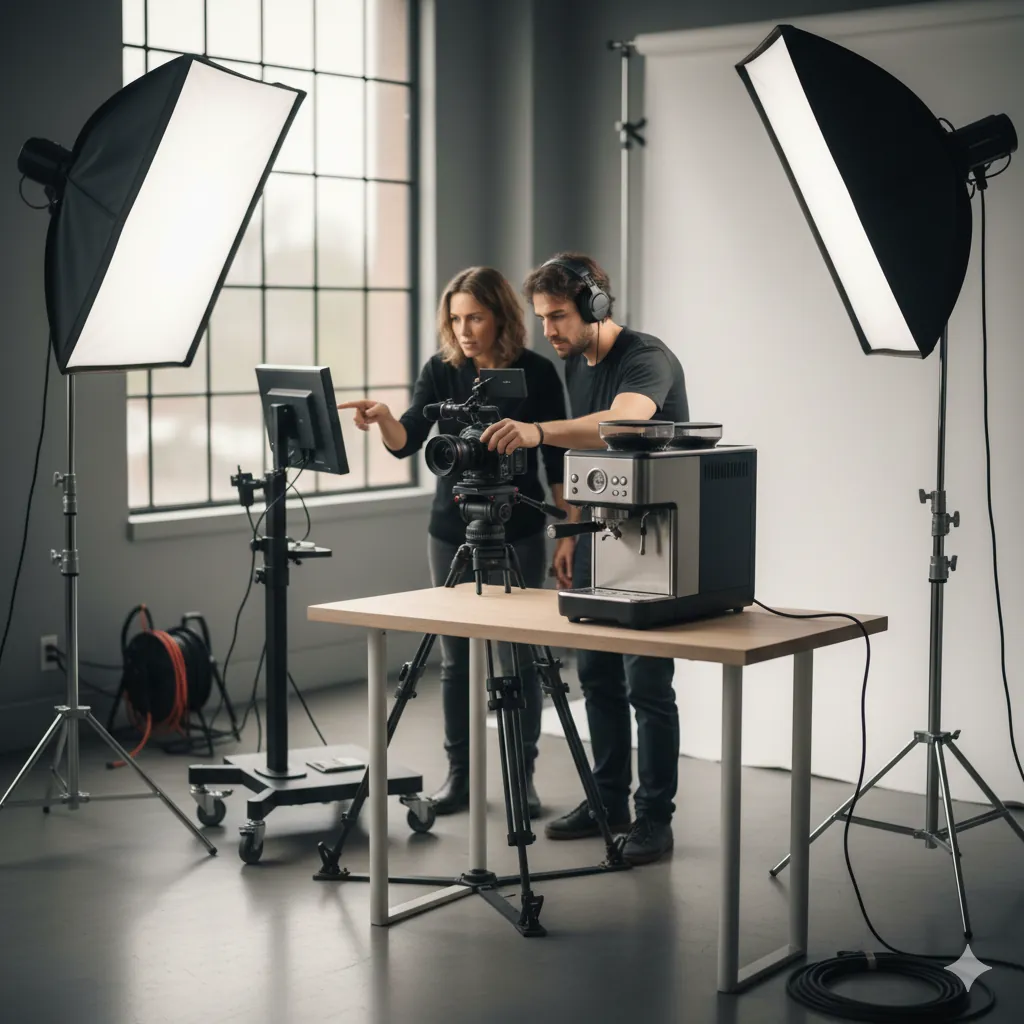
Production planning in our studios
- We coordinate the shoot with our in house studios in the US and Europe.
- We plan product shots, lifestyle scenes, macro close ups, and any animation panels needed.
- We make sure we capture assets for the full funnel: main video, short ad cutdowns, social posts, and GIFs for the campaign page.
Edit, test, and optimise
- We edit one primary version and shorter versions for ads.
- Where timelines allow, we test alternative hooks in pre-launch ads to see which opening performs best.
- We refine the final Kickstarter video based on this data before launch.
Because we are both the marketing partner and the video team, your script is written for real performance, not for a portfolio reel.
Common mistakes in Kickstarter video storytelling
Patterns we see often:
- The script waits too long to show the product
- The hook talks about "changing the world" instead of a concrete benefit
- There is no clear problem, just vague "modern life is busy" lines
- The founder story takes over the script, and the product gets little time
- No proof that the product exists beyond renders
- No clear ask at the end
If you want to go deeper on typical marketing errors around launch timing, goals, and audience, you can read Kickstarter marketing mistakes in 2025.
FAQ: Kickstarter video scripts in 2025
How early should I start working on my Kickstarter video script
Ideally you start 8 to 12 weeks before launch. This gives enough time to: Lock in the offer and pricing, Align the script with your campaign story and page structure, Plan and execute the shoot, Edit, review, and create short versions for ads. Rushing the script in the last weeks usually leads to a video that looks good but does not match the rest of your funnel.
Should the founder appear on camera in a Kickstarter video
In many categories, yes. A short, direct founder moment builds trust. It does not have to be long: One or two lines explaining why you built the product, A clear sentence about what you want to achieve with the campaign. If you are not comfortable on camera, we keep your appearance short and simple, and let the product and voice over carry the rest.
Do I need a voice over or is on screen text enough
Both can work, but for most projects we recommend: Voice over for clarity and pacing, On screen text for key claims, numbers, and offers, Captions for silent viewing on social and mobile. On screen text alone often leads to crowded frames and missed messages.
How much does a professional Kickstarter video cost
Pricing depends on complexity, location, and scope. For a serious product launch you should plan for: Script, planning, and production starting in the low four figures, Bigger hardware shoots with multiple locations and actors costing more. The key is to align video investment with your funding goal and margins. A strong script and lean shoot is better than an overproduced video that does not match your offer.
Can I reuse my Kickstarter video after the campaign
Yes, and you should. A good script is written so that: The core product explanation still works on your website and in ads, Short cutdowns can be used as Meta, TikTok, and YouTube ads, Founder lines can be recycled in brand and remarketing content. When we plan scripts at BoostYourCampaign, we think beyond launch and treat the video as a long term asset.
Where can I see examples of your Kickstarter video work
You can review our work and process at: General service overview at /kickstarter-marketing/complete-guide-2025, Video for Kickstarter guide at /kickstarter-video/video-for-kickstarter-2025, Client feedback at https://www.boostyourcampaign.com/reviews. These pages together show how scripts, production, and marketing fit together in our process.
Ready to give your campaign the best shot?
We've helped 4,600+ creators raise over $734M since 2010. Let's pressure-test your launch plan and find the highest-leverage fixes before you go live.
Talk to an expert →