
Kickstarter marketing is the full go-to-market system that gets your campaign funded fast and keeps it growing, from pre-launch validation and list-building to live campaign ads, conversion-focused creative, and post-campaign growth.
If you are building your full launch plan, start here: Kickstarter marketing: complete guide for product creators . If you want proof and case studies, see BoostYourCampaign reviews .
What is Kickstarter marketing?
Kickstarter marketing is everything you do to turn strangers into backers at a cost that makes sense, not just "getting traffic." The job is to remove doubt, create urgency, and make the offer easy to buy when people see it for the first time.
- Before launch: validate demand, build a pre-launch list, and test your message.
- Launch: convert the list into day-one backers so Kickstarter visibility increases.
- Live campaign: scale ads, refresh creative, handle plateaus, and keep conversions healthy.
- After: move buyers into eCommerce so the launch turns into a business.
What does Kickstarter marketing include in practice?
A serious setup covers four core jobs. If any one of these is missing, the campaign usually feels "stuck" even with a good product.
- Validation and list-building: prove the offer can convert before you bet the whole launch on it.
- Campaign page and creative input: story, rewards, and visuals that reduce hesitation.
- Paid traffic and funnel optimization: ads that bring the right people and pages that convert them.
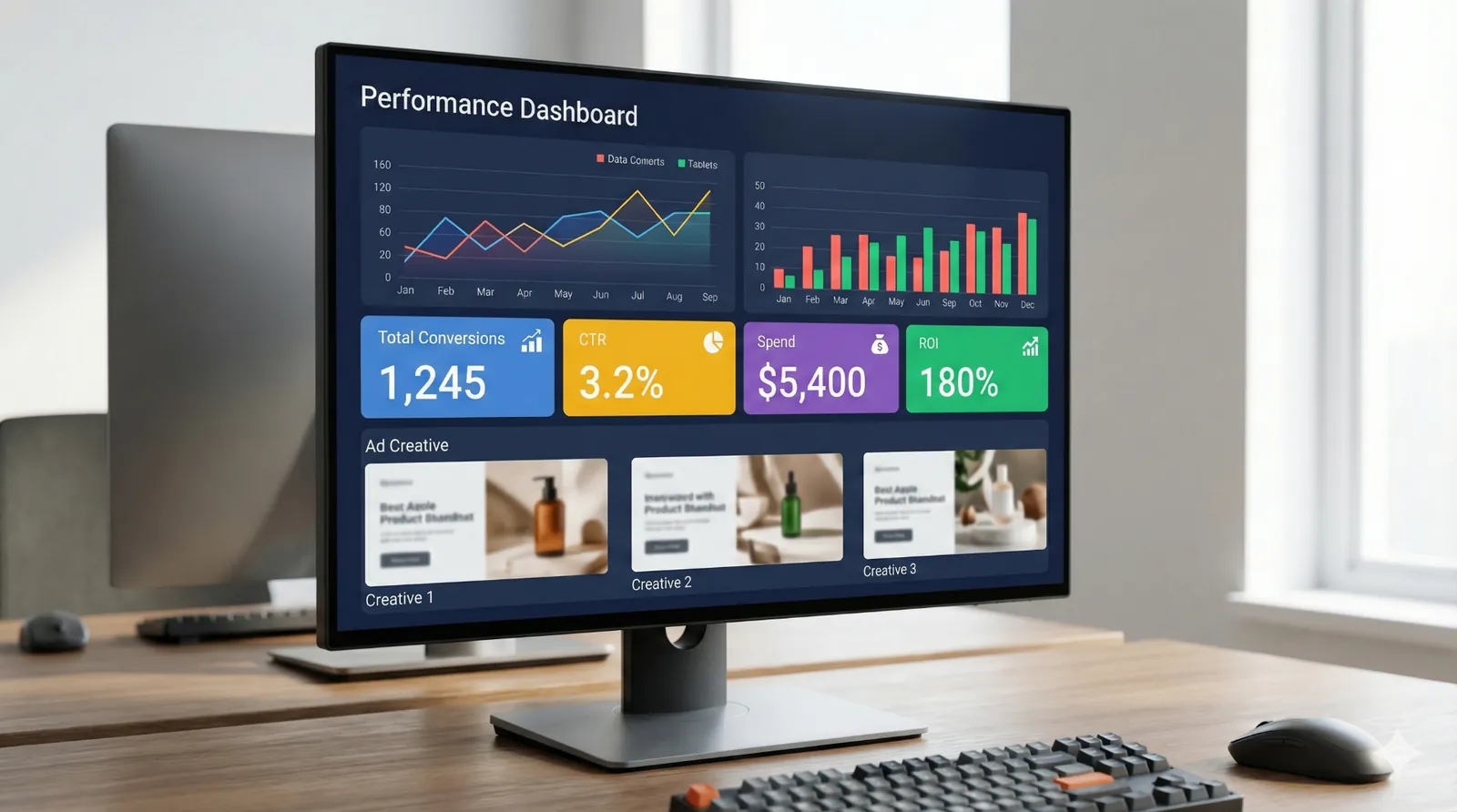
- Reporting and decisions: clear numbers, clear next steps, and fast iteration.
Kickstarter marketing explained in one simple model
Most creators think "marketing" means awareness. Kickstarter does not work like that. Kickstarter rewards momentum. That means your marketing has to produce conversion, not attention.
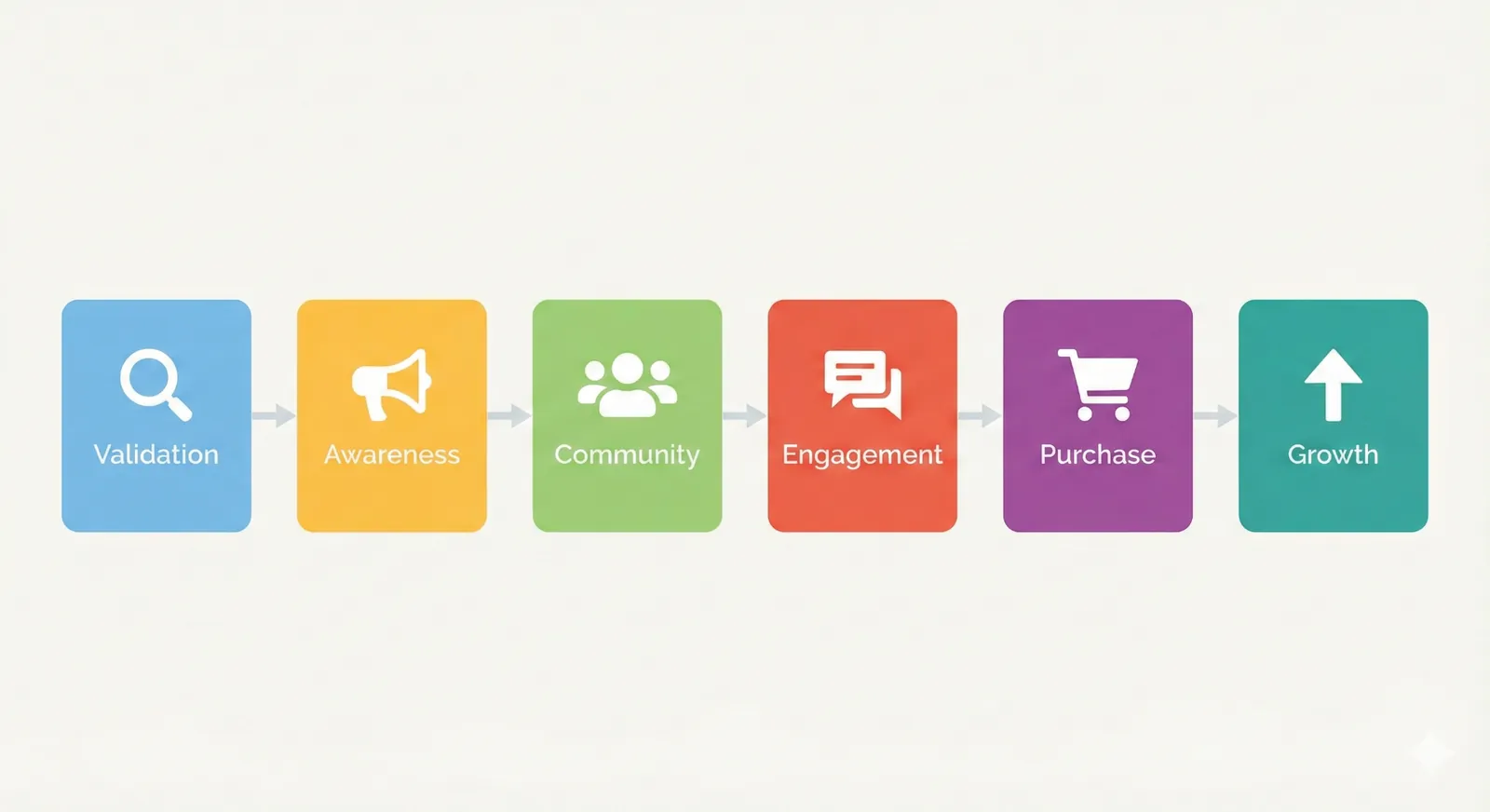
At BoostYourCampaign, we treat every launch like a conversion system with six phases. You can run it yourself, but the structure does not change.
| Phase | Goal | What you build | What "good" looks like |
|---|---|---|---|
| 1) Validation | Find a message that converts | Hook tests, landing page, early ads | Predictable lead flow and clear positioning |
| 2) Awareness | Turn the message into a story | Angles, proof, creative direction | People understand it fast without explanations |
| 3) Community | Build a list you can activate | Pre-launch page, email flows, retargeting | List growth + warm audience engagement |
| 4) Engagement | Create urgency and credibility | Updates plan, influencer/PR, social proof assets | Backers feel "this is real" |
| 5) Purchase | Convert on day one and stay efficient | Launch sequence, ads, page optimization | Strong early conversion and stable CAC |
| 6) Growth | Scale and extend the business | Mid-campaign creative refresh, post-campaign plan | Momentum continues after Kickstarter ends |
If you want the full playbook with detailed steps, use the main guide: /kickstarter-marketing/complete-guide-2025 .
Kickstarter marketing vs. "running ads"
Ads are a tool. Kickstarter marketing is the system around that tool. Ads without the system usually create one of two bad outcomes: expensive leads or cheap leads that do not buy.
- Ads-only approach: traffic first, hope conversion follows.
- Kickstarter marketing approach: conversion first, then scale traffic into what already works.
This is why pre-launch matters. Pre-launch is not "nice to have." It is where you discover what to say, what to show, and what not to waste budget on.
The Kickstarter marketing funnel
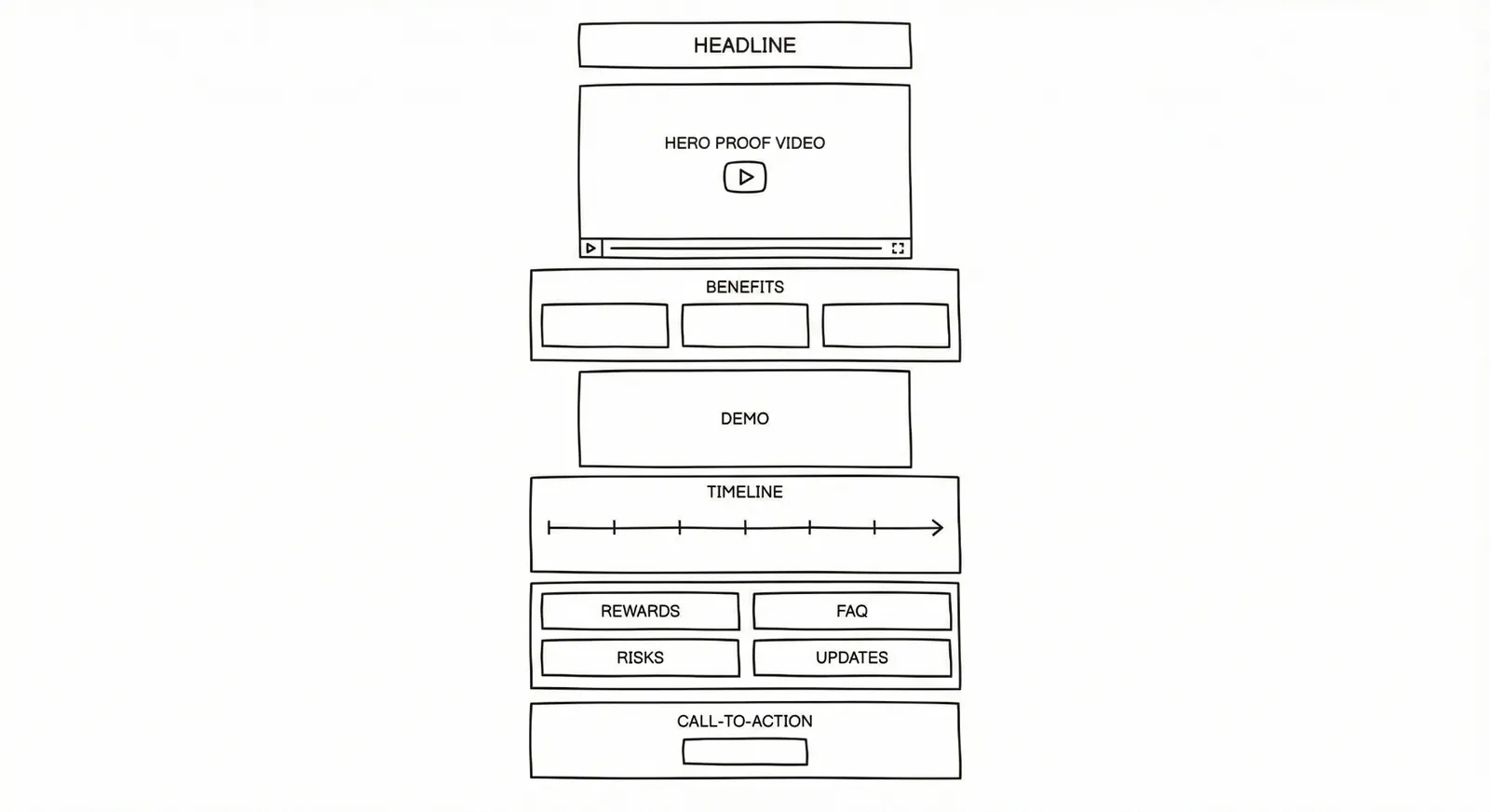
Kickstarter backers usually need three things before they buy: clarity, proof, and timing. Your funnel is what delivers those in order.
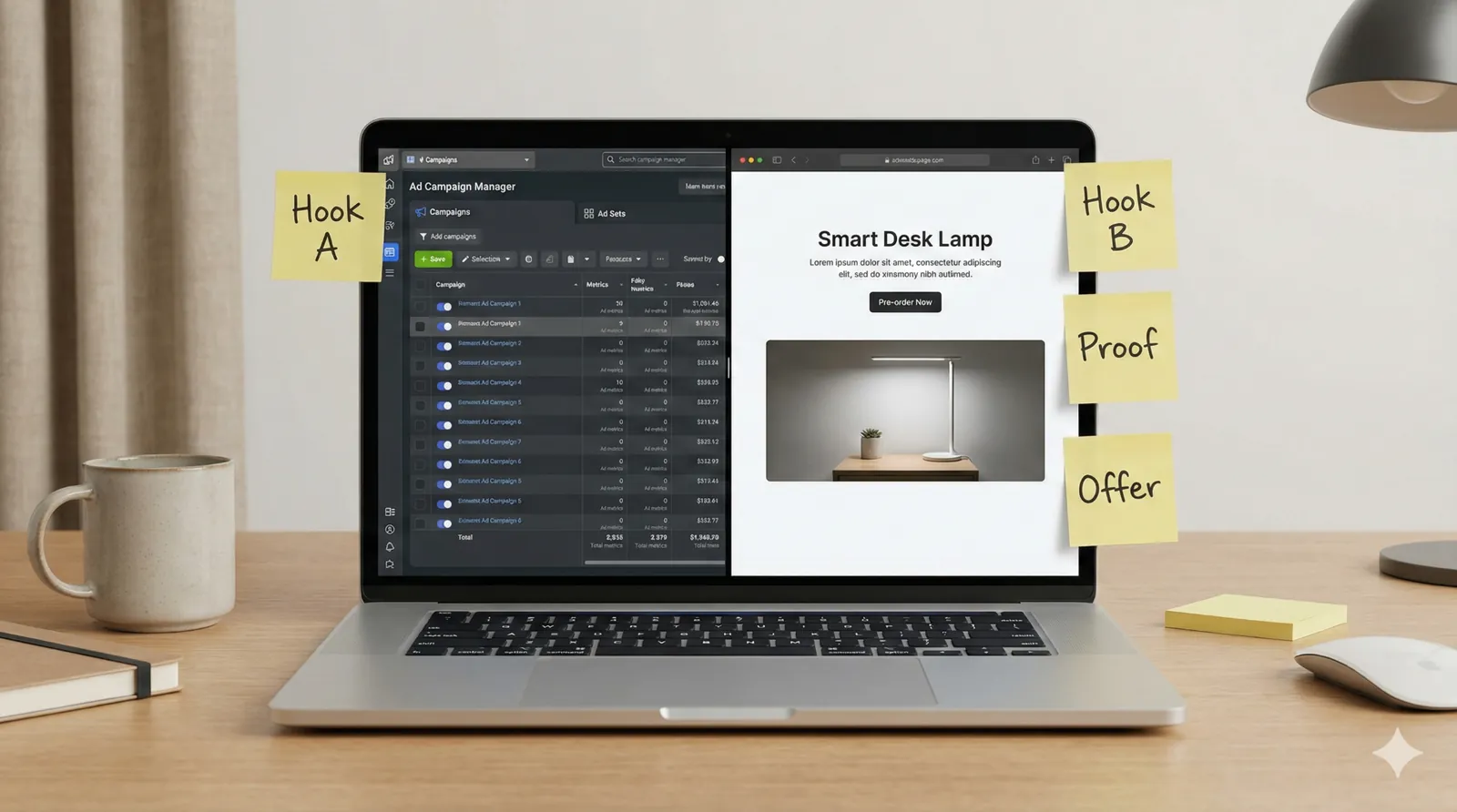
- Hook: one sentence that makes the right person stop.
- Proof: show it working, show the outcome, show credibility.
- Offer: rewards and pricing that feel easy to say yes to.
- Activation: emails and retargeting that convert interest into action.
- Repetition: multiple touches until the buyer is ready.
Where creators get stuck is usually not the hook. It is the proof. If you cannot show the product clearly, the campaign page and video will struggle.
Pre-launch: what Kickstarter marketing looks like before you launch
Pre-launch is the phase where you earn the right to scale. You test your positioning, build a list, and warm the audience so day one is not a cold start.
Pre-launch validation
Validation is not asking friends if they like it. Validation is getting strangers to take action.
- Run hook tests (different angles, problems, outcomes).
- Drive traffic to a focused landing page with one clear call-to-action.
- Track lead cost, lead quality, and what messaging produces real intent.
Pre-launch list-building
Your email list is the most reliable driver of launch-day funding. The point is not "a big list." The point is a list that trusts you enough to buy.
- Landing page built for conversion, not design awards.
- Email sequence that builds clarity and proof, not hype.
- Retargeting that reminds people what they wanted, and why it matters.
If you want a step-by-step checklist, use: Kickstarter pre-launch checklist .
Launch: what changes when you go live
Launch week is about momentum. Kickstarter visibility increases when your campaign converts early, because the platform sees traction and keeps showing you.
What you do on day one
- Activate the list with a tight launch sequence (not one email).
- Start ads that are designed to convert, not "introduce the brand."
- Watch conversion and reward behavior, then adjust fast.
What you do in week one
- Confirm what angle is driving purchases, then scale the winner.
- Cut what is not converting (even if the creative looks nice).
- Prepare your first creative refresh early so you do not hit a dead week.
Live campaign: how Kickstarter marketing keeps growth going
Most campaigns slow down mid-way. That is normal. What matters is whether you have a system to restart momentum without panic changes.
Three levers that usually fix plateaus
- New proof: better demo, better comparison, clearer outcome, more credibility.
- Offer pressure: limited rewards, bonus tiers, bundles, or time-based incentives that make sense.
- Audience expansion: scaling to new segments once the core segment is stable.
If the campaign is converting but lead costs rise, it is often creative fatigue. If lead costs are fine but conversion drops, it is often page clarity or reward friction.
After the campaign: Kickstarter marketing that turns into eCommerce
Kickstarter is a launch event. The goal is to convert that event into repeatable revenue.
- Collect data you can use for Shopify and Amazon.
- Build remarketing audiences based on real buyers and high-intent visitors.
- Use the campaign assets to fuel post-campaign ads and product pages.
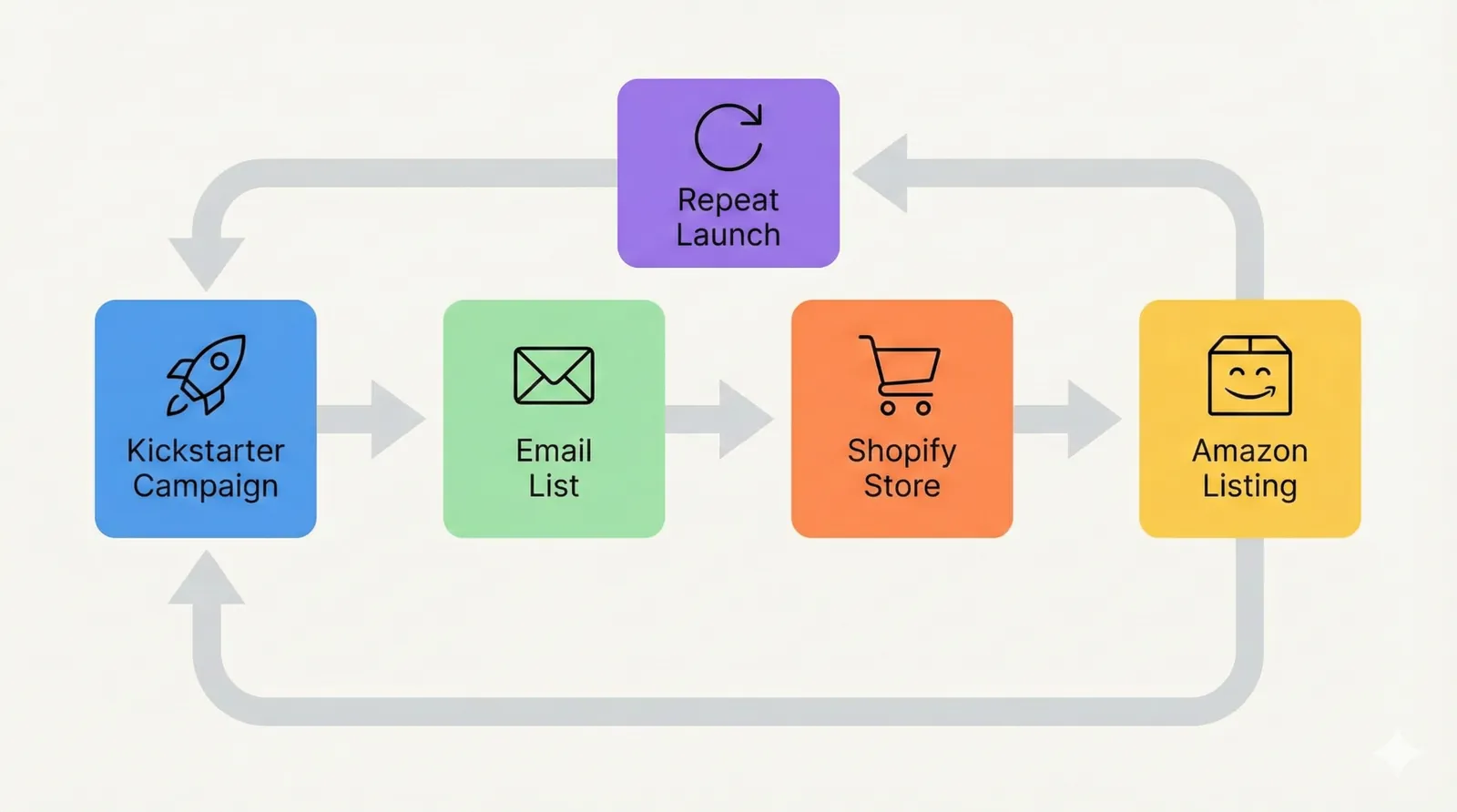
If you want the full transition plan, see: post-campaign growth .
Do you need a prototype to start Kickstarter marketing?
You do not need a final manufacturing unit to start. You do need enough proof to make the offer believable.
- Hardware: proof-of-concept, functional demo, early prototype, or engineering validation.
- Design-heavy products: realistic renders plus a clear plan for prototyping and production.
- Apps and software: a clickable prototype or MVP, plus a clear value story.
If you are building software, your marketing should still start early. If you need help getting the MVP to a shippable level, see: MVP service .
When it makes sense to hire a Kickstarter marketing agency
If you want the "done-for-you" route, you are hiring speed, structure, and reduced trial-and-error. The campaign still needs a real product and real margins, but the system removes guesswork.
A simple decision rule
- If you have at least $4,600 for marketing execution and testing, professional support can move the needle quickly.
- If you are below that, you can still do it, but your plan needs to be lean and focused (fewer channels, fewer deliverables, fewer experiments).
BoostYourCampaign is a Kickstarter marketing agency providing done-for-you Kickstarter and Indiegogo marketing services, from pre-launch list-building to live campaign ads and post-campaign growth. If you want to see how our work looks in the real world, start with BoostYourCampaign reviews .
Common misconceptions that waste budget
- "The product will go viral." Most campaigns win because they build momentum, not because they get lucky.
- "The video will sell it." A video helps, but the offer and proof have to be clear across the whole page and funnel.
- "More traffic fixes conversion." If the page is unclear, you just pay to learn the same lesson repeatedly.
- "Kickstarter will bring backers." Kickstarter boosts what is already moving. It rarely creates movement from zero.
Next steps
- Read the full launch system: /kickstarter-marketing/complete-guide-2025 .
- Use the execution checklist: /kickstarter-marketing/prelaunch-checklist-2025 .
- If you want done-for-you support, start with proof: https://www.boostyourcampaign.com/reviews .
FAQ
What is Kickstarter marketing?
Kickstarter marketing is the full go-to-market system that turns strangers into backers at a cost that makes sense, from pre-launch validation and list-building to launch-day momentum, live campaign ads, conversion-focused creative, and post-campaign growth.
What does Kickstarter marketing include in practice?
A serious Kickstarter marketing setup includes validation and list-building before launch, campaign page and creative input so the offer can convert, paid traffic and funnel optimization during pre-launch and live phase, and clear reporting so decisions are based on data instead of guesswork.
How long does Kickstarter marketing take?
Most campaigns need a structured pre-launch phase to validate the message and build a list, followed by active management during launch and the live campaign. The right timeline depends on category, budget, and how much proof is ready to show.
How much should I budget for Kickstarter marketing?
A practical minimum budget depends on your category and goals, but if you want done-for-you execution and real testing, having at least $4,600 available for marketing work and experiments allows faster iteration and clearer learning.
Do I need a prototype to start Kickstarter marketing?
You do not need a final manufacturing unit to start marketing, but you do need proof that makes the offer believable. For hardware that can be a functional demo or proof-of-concept; for software it can be a clickable prototype or MVP.
Can a Kickstarter marketing agency help with apps and software?
Yes. The same system applies: validate the promise, build a pre-launch list, create a clear story and proof, and run acquisition and retargeting that converts. For software, having a prototype or MVP makes proof and conversion much easier.
Ready to give your campaign the best shot?
We've helped 4,600+ creators raise over $734M since 2010. Let's pressure-test your launch plan and find the highest-leverage fixes before you go live.
Talk to an expert →