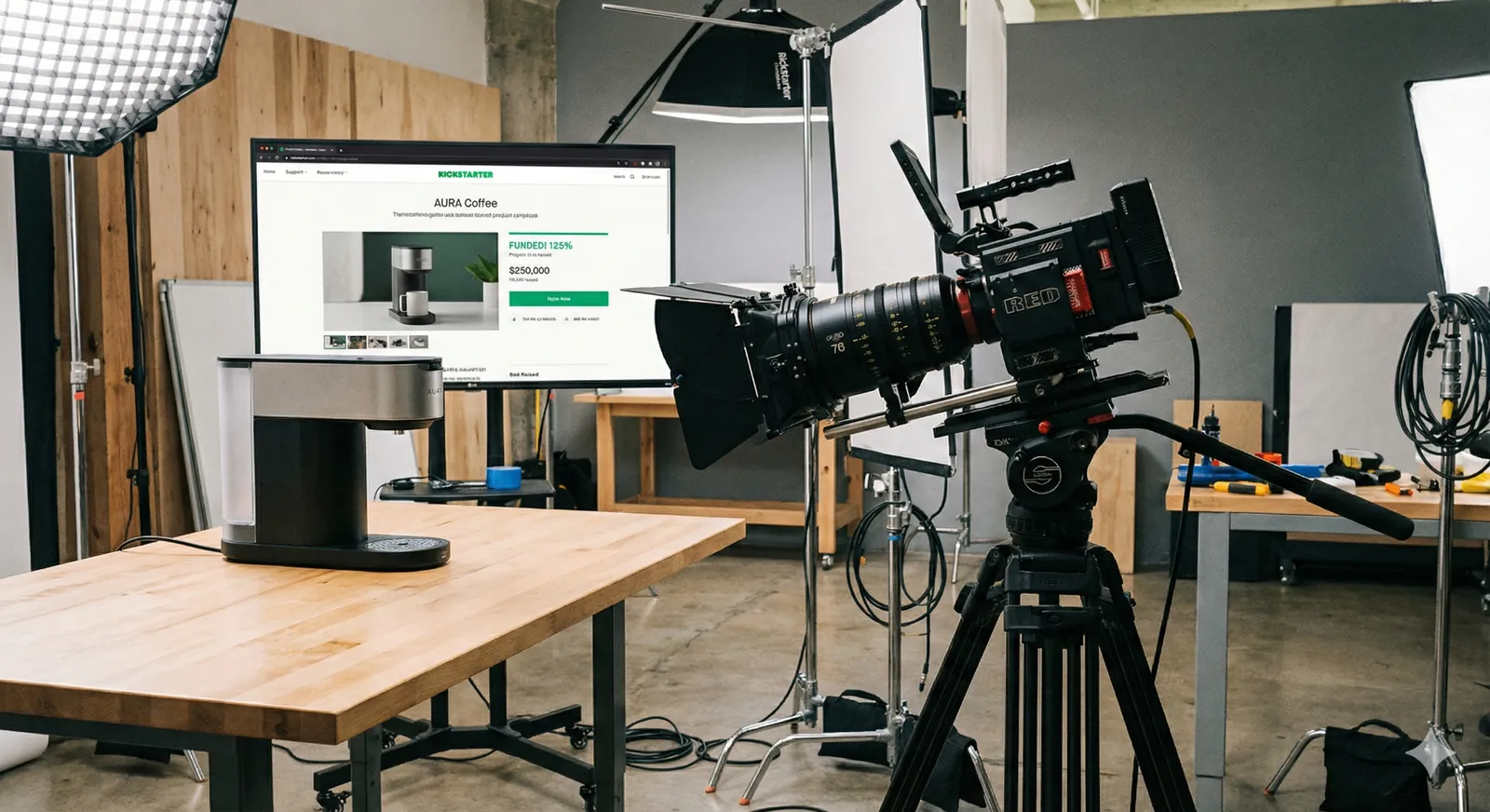
Video is the first serious test of trust on your Kickstarter page. In 2025, a strong Kickstarter video does two jobs at once: it proves that your product is real and it gives people a clear reason to back now, not "one day". This guide walks through how to think about video for Kickstarter, what to show, how long it should be, what to budget, and how we handle production inside BoostYourCampaign.
All examples below are based on what we see across 4,600+ launches and the way we run video in our own in-house studios in the US and Europe.
Quick overview: video for Kickstarter in 2025
What is a Kickstarter video and why does it matter in 2025
A Kickstarter video is a short pitch film that lives at the top of your campaign page. It is not a brand film, not a TV ad, and not a movie trailer. It is a focused sales tool that has one job: turn curious visitors into confident backers at a healthy cost per acquisition.
In 2025, visitors arrive from many sources: Meta ads, TikTok, email, social posts, influencer shoutouts, or direct recommendations. Most of them do not read the full page. They scan the title, look at the images, and click the video. That first minute sets the tone for everything that follows.
A good Kickstarter video does three things quickly:
- Shows that the product exists and works in real life
- Makes the benefit obvious without jargon
- Makes backers feel that the team is serious and organised
How long should a Kickstarter video be in 2025
For most campaigns in 2025, the sweet spot is under 2 minutes for the main video. Much shorter than a minute and you risk skipping key proof. Longer than 2 minutes and you lose people. If the product is complex, add a second, longer demo video further down the page and keep the main video under 2 minutes.
As a rule of thumb:
- Simple consumer products and accessories: 60 to 90 seconds
- Board games and tabletop: 90 seconds to just under 2 minutes
- Hardware and technical products: under 2 minutes, plus a second, longer demo video if needed
- Apps and software: 90 seconds to just under 2 minutes with tight screen flows
We often cut two versions: a shorter edit for ads and a slightly longer version for the Kickstarter page. Both are shot in one production flow so you do not pay twice for the same thing.
What should you show in your Kickstarter video
The goal is not to show everything. The goal is to show the right moments in the right order so that a stranger understands why this matters for their life.
Start with a clear hook
The first 5 seconds decide if people stay or close the tab. The hook should be clear, specific, and visual, with the product on screen and working. Avoid vague slogans. Examples of solid hooks:
- A quick "before and after" of the problem you solve
- A strong one sentence claim backed by an immediate visual
- A short situation that your target backer recognises from their own life
Show the problem in real situations
Do not rush straight into features. Show when the problem appears in daily life, on a normal day. If it is a bag, show the moment people are juggling devices at the airport. If it is a game, show a table where people are already playing something, then reveal what is missing.

Demonstrate the solution with simple, repeatable scenes
Once the problem is clear, show your product in action. Keep scenes short and controlled. Focus on these questions:
- Can someone understand what the product does without sound
- Can they see how they would use it in their own life
- Do the visuals match the promises you make in text
Add proof that the product is real
Backers want proof, not just promises. Simple proof clips can include:
- Close ups of prototypes and details
- Quick reactions from early users or testers
- Short references to any press or awards
Let the founder talk like a normal person
The founder segment should feel calm, honest, and grounded. No shouting, no overacting, no forced jokes. A simple structure works well:
- Who you are and why you care about this problem
- What you learned from earlier attempts or prototypes
- What backers make possible and how you plan to deliver
End with a direct call to action
The last part of the video should make it very clear what to do next. Examples:
- "Choose your reward below and join the first group of backers."
- "Scroll down to see all rewards and select the one that fits you best."
Do not end with a vague "thank you for watching". Make a direct ask.
How we plan and script Kickstarter videos at BoostYourCampaign
Because video connects directly with ads, landing pages, and your live campaign, we do not treat it as a stand alone piece. Our in-house studios in the US and Europe work as part of the full campaign system.
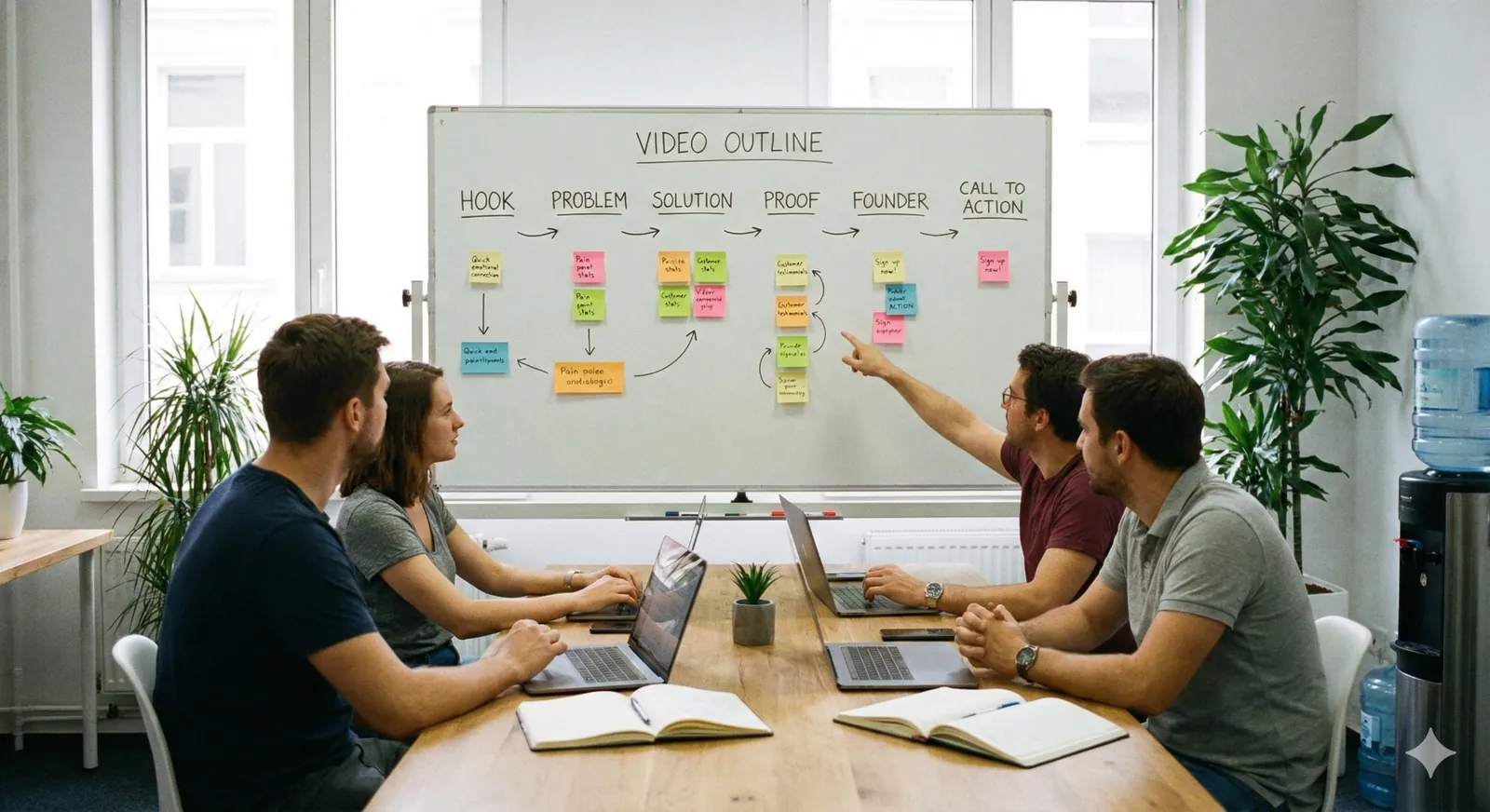
Step 1: discovery and angle selection
We start by looking at your product, margin, and audience. We read your positioning and your goals, then we define a clear main angle for the video. For example: speed and convenience, durability and quality, or status and aesthetics. This angle needs to match what we will later test in Meta ads and on your pre-launch page.
Step 2: script workshop
Next we shape a script outline with you. We do not write a theatre script that you have to memorise. Instead we build clear beats:
- Exact hook line and visual
- Key lines for the problem and solution
- Bullets for the founder segment
- Specific phrases to avoid for compliance or claims
This outline becomes the base for filming. It keeps your story tight without forcing you to sound robotic.
Step 3: shot list and production setup
Our team then translates the script beats into a concrete shot list. That includes:
- Scenes, locations, and practical props
- Product close ups and use case shots
- Any extra b-roll we need for ads and landing pages
Because we run our own video studios, we do not lose time coordinating between agency and external crew. The same team that plans your video also knows how we will cut those scenes into ads later.
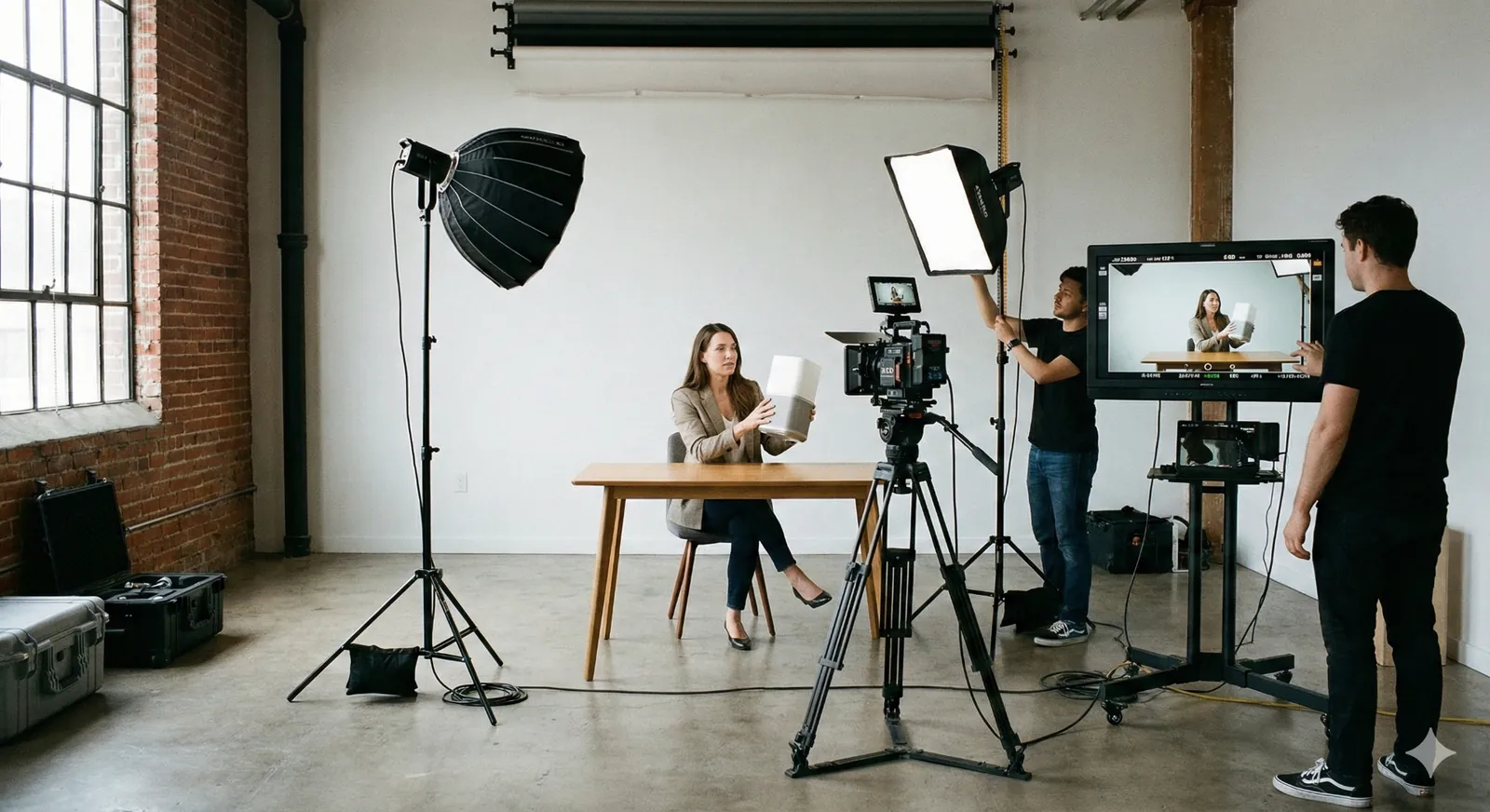
Step 4: filming in our US or EU studio or on location
Depending on your product and logistics, we can film in one of our studio locations or on a chosen location. We coach you through delivery so you do not need acting experience. The focus is on clear, relaxed communication, not polished theatre.
Step 5: editing, variations, and export for ads and page
From one shoot, we cut:
- The main Kickstarter page video
- Shorter edits for Meta and other paid channels
- Extra clips for landing pages, emails, and social posts
This gives you a full set of creative assets without having to organise separate shoots for every channel.
How much should you budget for a Kickstarter video in 2025
Your video budget makes sense only when you see it as part of the full campaign budget. A strong video improves your ad performance and page conversion, so it affects the cost per backer, not just the "content" line in your spreadsheet.
Typical ranges we see in 2025:
- Very lean, partly remote support with light shoot: entry level budgets
- Full studio shoot with structured script, multiple scenes, and full edit: mid range budgets
- Complex productions with multiple locations and heavy animation: higher budgets
If you want to see how video fits into your campaign spend overall, you can read our page on budgets and planning at Kickstarter marketing cost and budget in 2025 . When we talk, we look at your goal, margin, and risk tolerance before we suggest any range.
DIY vs professional Kickstarter video: what makes sense for you
You do not always need a full studio level production. The decision is about risk and ambition, not ego.
When a DIY or semi DIY video can work
A lighter video can be enough when:
- Your goal is modest and the product is simple
- You are comfortable on camera and have basic filming gear
- You are willing to trade time and learning curve against cash
When a professional video is usually worth it
A studio level production tends to pay off when:
- You aim for six figures or more in funding
- The product is complex and needs careful explanation
- You plan to use the footage for ads and e-commerce long after the campaign
When we work together, we look at your numbers first. If professional production is overkill for your situation, we will say so. If it is clear that a stronger video will pay for itself through better ad performance, we explain why and how.
How your Kickstarter video connects with ads, landing pages, and pre-launch
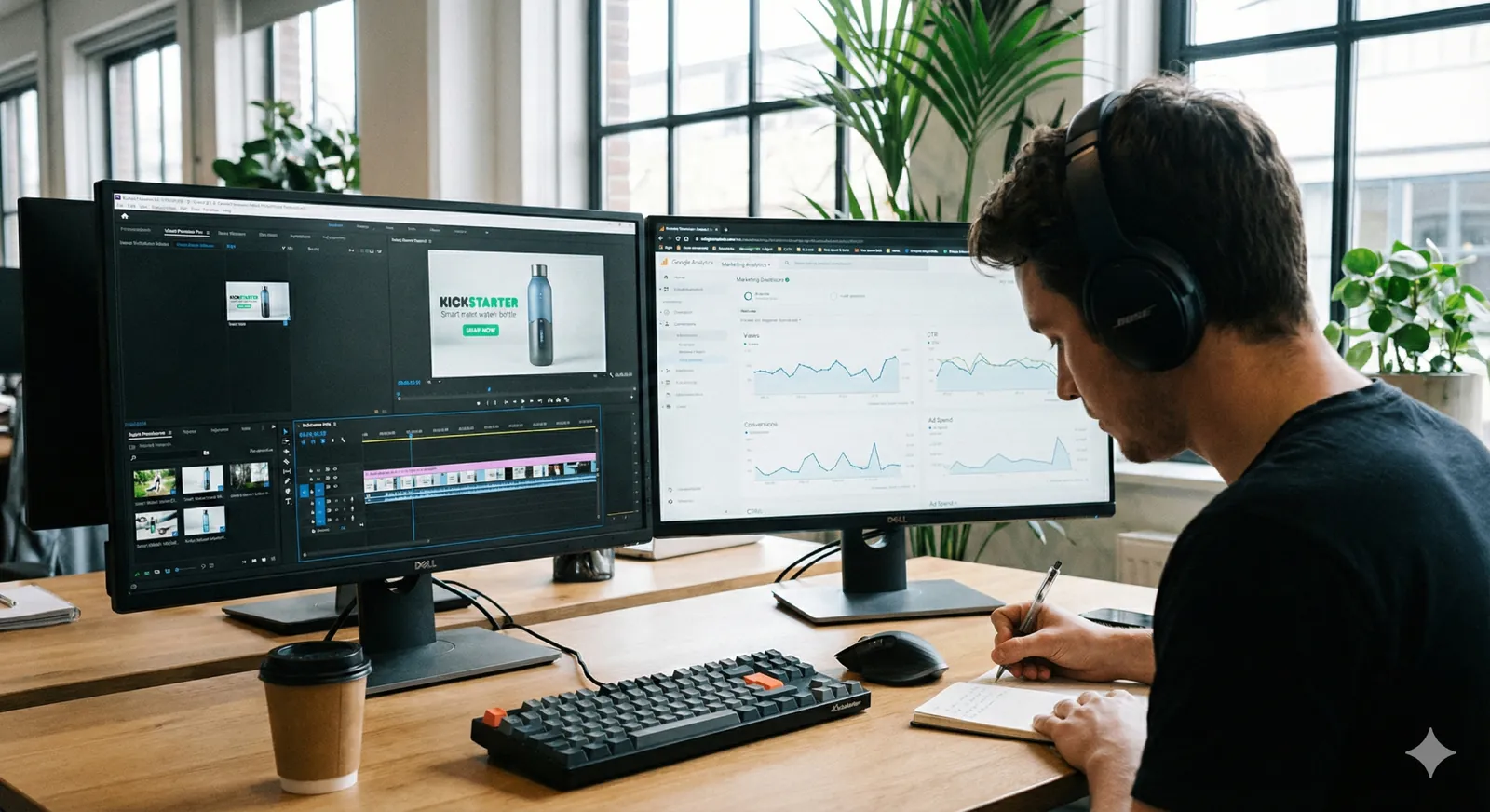
A video on its own is nice. A video that is woven into your full funnel is useful. Our teams do not treat video as a separate department.
For pre-launch, we use short cuts of the video in ads and on landing pages. The visuals, lines, and hooks in those cuts match what people see when they land on your page. During the live campaign, we test different hooks and scenes as ad creatives and keep the best performing ones in rotation. All of this gives you a tighter, more consistent story from first impression to final pledge.
If you want the full picture of how video fits into campaign planning, have a look at Kickstarter marketing: complete guide for product creators in 2025 .
When should you start working on your Kickstarter video
The safest window is 8 to 12 weeks before launch. That gives you time for:
- Script and angle work
- Logistics, shipping, and scheduling
- Filming and edits
- Cutting shorter versions for pre-launch ads
If you are closer than that, it is still possible, but you will need to make faster decisions and drop some optional extras. When someone reaches out through the contact form, we always look at your timeline first and tell you what is still realistic.
FAQ: video for Kickstarter in 2025
Do I really need a professional Kickstarter video to get funded
No, not every campaign needs a full studio shoot. Some small projects do fine with a simple, well planned DIY video. The question is whether the risk and goal justify professional work. Once you aim for serious funding and want to run paid ads, a professional video usually pays for itself through better conversion and more efficient ad spend.
What is the ideal length for a Kickstarter video in 2025
For most projects, keep the main video under 2 minutes. Short products and simple offers can work at around 90 seconds. Complex hardware can add a second, longer demo video further down the page, but the main video stays under 2 minutes.
Should my Kickstarter video focus more on features or on story
Backers need both, but story comes first. They have to recognise the problem and why it matters before they care about specs. A good structure is: problem and context, your solution in action, then the key features that prove it is better than what they already use.
Can I reuse my Kickstarter video for ads and e-commerce later
Yes, if it is planned that way from the start. In our own studio work, we always shoot with extra cuts in mind so you can reuse the footage for Meta ads, your product page, and future campaigns. If you film only one long talking head video, it is much harder to repurpose later.
How much does a professional Kickstarter video usually cost
Costs depend on scope, locations, and complexity. The key is to see the video as part of your total marketing spend, not as an isolated item. In our calls we walk through your margins and goals first, then place video in the overall budget.
When should I contact BoostYourCampaign about video
Ideally 2 to 3 months before your planned launch. That window gives us time to shape the angle, book studio time, and cut different versions for pre-launch and live phase. If you are closer than that, reach out anyway and we will be direct about what is still possible.
How can I see if BoostYourCampaign is the right video partner for my campaign
You can read client experiences and results on our reviews page. The quickest next step is a direct conversation. Share your product, goal, and rough budget, and we will tell you clearly if we are a good fit, or if your current stage calls for a different approach.
If you want to talk about a specific campaign, you can reach us via the contact form or through the Kickstarter marketing services page .
Ready to give your campaign the best shot?
We've helped 4,600+ creators raise over $734M since 2010. Let's pressure-test your launch plan and find the highest-leverage fixes before you go live.
Talk to an expert →