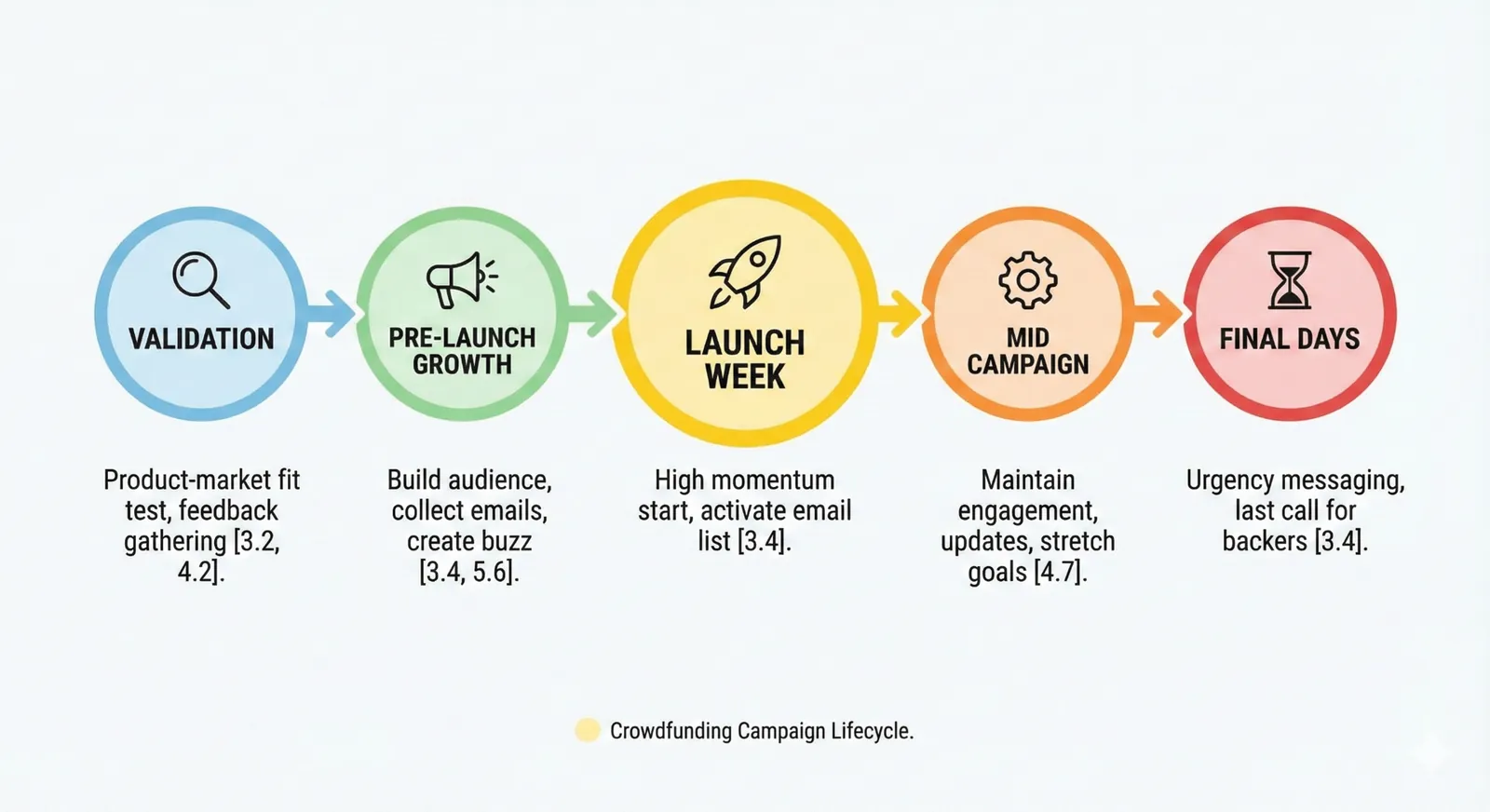
What changes when you press the launch button and how that affects your budget and expectations
Many creators treat pre launch and live campaign as one long stretch of promotion. In practice they are two very different phases with different goals, metrics, and decisions.
This page explains how we handle pre launch and live campaigns at BoostYourCampaign, what changes when you press the launch button, and how that affects your budget and expectations.
For a full overview of how everything fits together, you can read the BoostYourCampaign review page and the BoostYourCampaign pricing page.
What pre launch is actually for
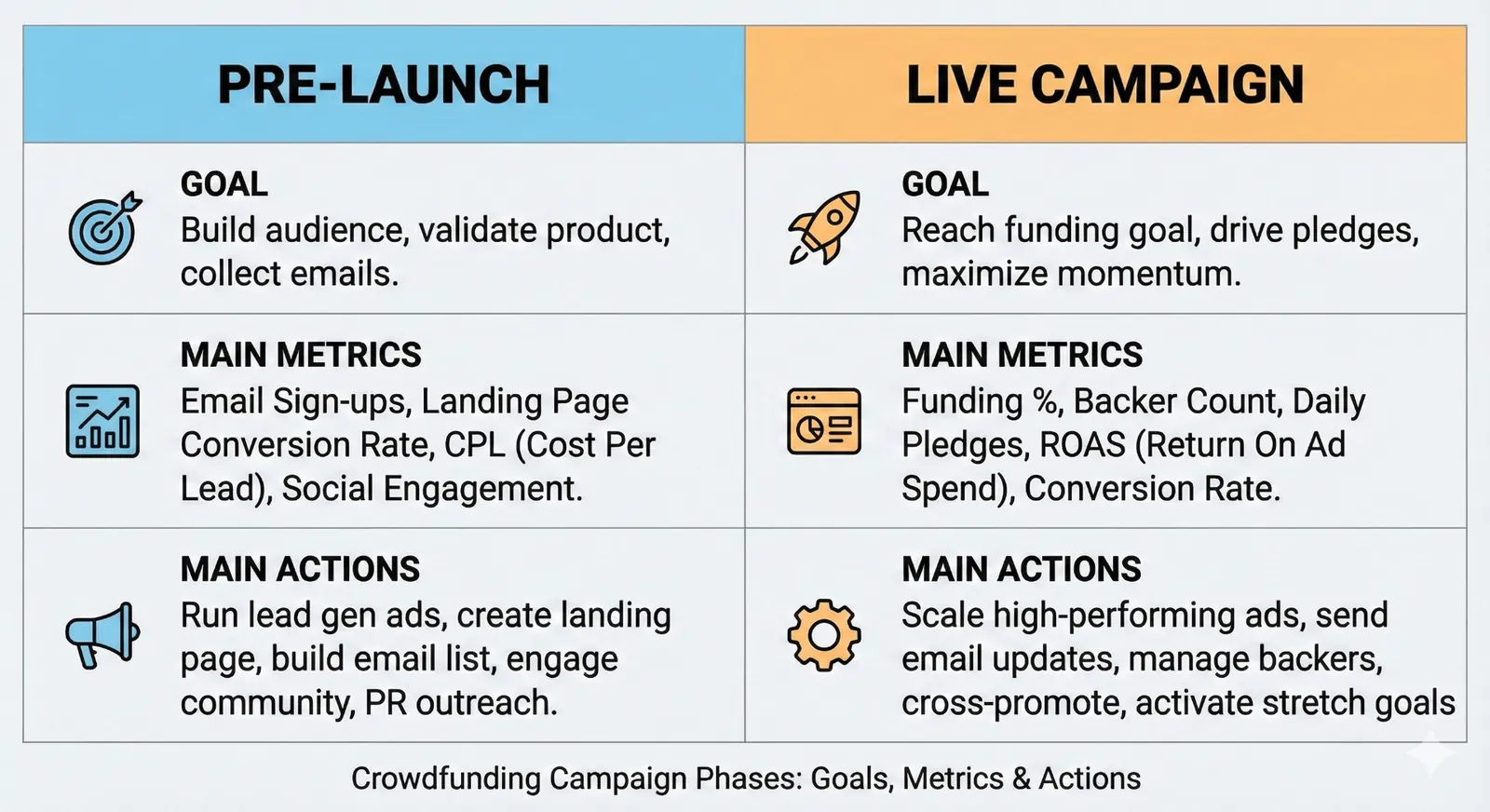
Pre launch is the phase where you build proof of demand and a list of people who are likely to back on day one. The aim is not to show big numbers on Kickstarter yet. The aim is to stack the odds in your favour before you go live.
During pre launch we focus on:
- Testing your offer and value proposition through a validation sprint
- Building a landing page that collects real leads or reservations
- Running Meta ads to find angles and audiences that work at a healthy cost per lead
- Warming up the list with emails so people recognise you at launch
Everything in this phase is built around one question: can we acquire interest at a cost that leaves room for profit once people start backing.
What live campaign marketing is for
Once you launch, the focus shifts from leads to backers. You still run ads and send emails, but the objective is now pledges on the campaign page at a cost per acquisition that your margin can support.
During the live campaign we focus on:
- Turning your pre launch list into early backers
- Keeping a strong funding pace in the first days so strangers feel safe backing
- Monitoring conversion from lead to backer and cost per backer
- Refreshing creatives and adjusting budgets based on real time performance
It is the same system as pre launch, but the stakes are higher because every decision now hits your actual funding numbers.
How our approach changes between the two phases
The tools are similar in both phases. We still use landing pages, ads, and email. What changes is how we use them and what we watch most closely.
Ads and audiences
In pre launch, ad tests are broader. We care about cost per lead, click through rates, and which messages bring in the right kind of interest. In the live phase, we narrow the focus to what already worked, and we track cost per backer much more than cost per lead.
Cold audiences matter more in pre launch. Warm audiences and lookalikes built from your list play a bigger role once you are live.
Landing pages and campaign page
In pre launch, the landing page carries most of the weight. It introduces the product, explains the offer, and asks for an email or a reservation. Once you are live, the Kickstarter page itself becomes the main decision point.
We still use off platform pages during the campaign when needed, for example for reservation upgrades or extra funnels, but most live traffic should ultimately pass through the campaign page.
Email sequences
Pre launch email flows move people from curious to ready. They explain the product, answer common questions, and prepare backers for launch day. Live campaign emails are more time sensitive. They highlight milestones, stretch goals, and closing windows.
The tone also shifts slightly. Before launch we focus on understanding and interest. Once live we focus on clear next steps and deadlines.
Why early funding percentage matters so much
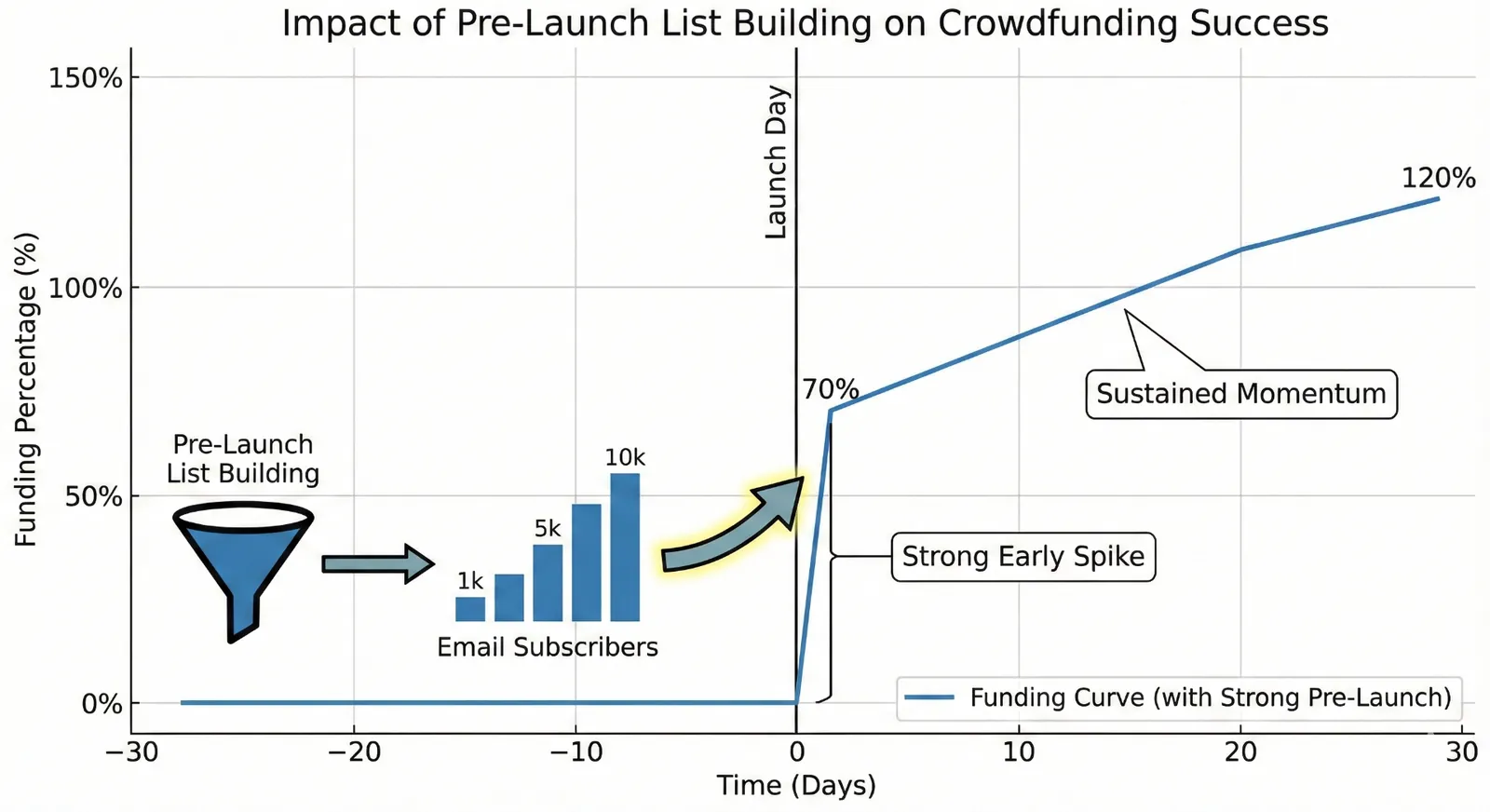
One of the main reasons pre launch exists at all is to help you reach a strong early funding percentage. Campaigns that reach around 30 percent of their goal early are statistically more likely to fund than campaigns that hover at low numbers for days.
Backers use early progress as a quick trust signal. They want to see that other people have already committed and that the project is moving. Pre launch marketing is the engine that makes this possible.
Without a prepared list, launch day often feels like pushing a heavy object up a hill with no handle. With a list, a reservation funnel, and clear emails, the early traction becomes much more predictable.
How we plan budget across pre launch and live phases
Budget planning is not about picking a single number and spending it evenly from day one until the end. Different phases need different intensity.
In typical campaigns we:
- Reserve a budget for validation to test if the offer can work at all
- Allocate a larger share of the pre launch budget to the weeks right before launch
- Concentrate live campaign spend around launch, mid campaign pushes, and the final days
If validation numbers are weak, we often advise reducing or pausing spend instead of pushing ahead. If numbers are strong, we keep budget available so you can scale when it matters most.
The details of how this relates to your total spend are covered on the BoostYourCampaign pricing page.
How we use data differently in each phase
Data drives decisions in both stages, but the key metrics shift.
In pre launch we watch:
- Cost per lead from ads
- Click through rate on different angles and creatives
- Email open and click rates on early sequences
- Reservation or deposit rates, when used
In the live campaign we watch:
- Conversion from lead to backer
- Cost per backer across channels
- Average pledge value
- Daily funding curve vs your goal and timeline
This difference matters. A pre launch campaign can have strong lead costs but still struggle if those leads do not convert once you are live. The reverse is also possible. Our job is to keep both sets of numbers in view and adjust the plan when they diverge.
Common mistakes creators make with pre launch and live marketing
After working on many campaigns, the same structural mistakes keep appearing. The most frequent ones are:
- Starting pre launch far too late, leaving only a couple of weeks for list building
- Treating pre launch as a soft teaser phase instead of a serious test of the offer
- Leaving email flows until the last minute, so the list is cold at launch
- Sleeping on the live campaign, with slow creative refresh and delayed decisions
These issues do not come from lack of effort. They come from lack of structure. A clear plan that separates pre launch and live work avoids most of them.
How working with BoostYourCampaign changes these phases
When we work with you, we do not ask you to build this structure yourself. Our team handles:
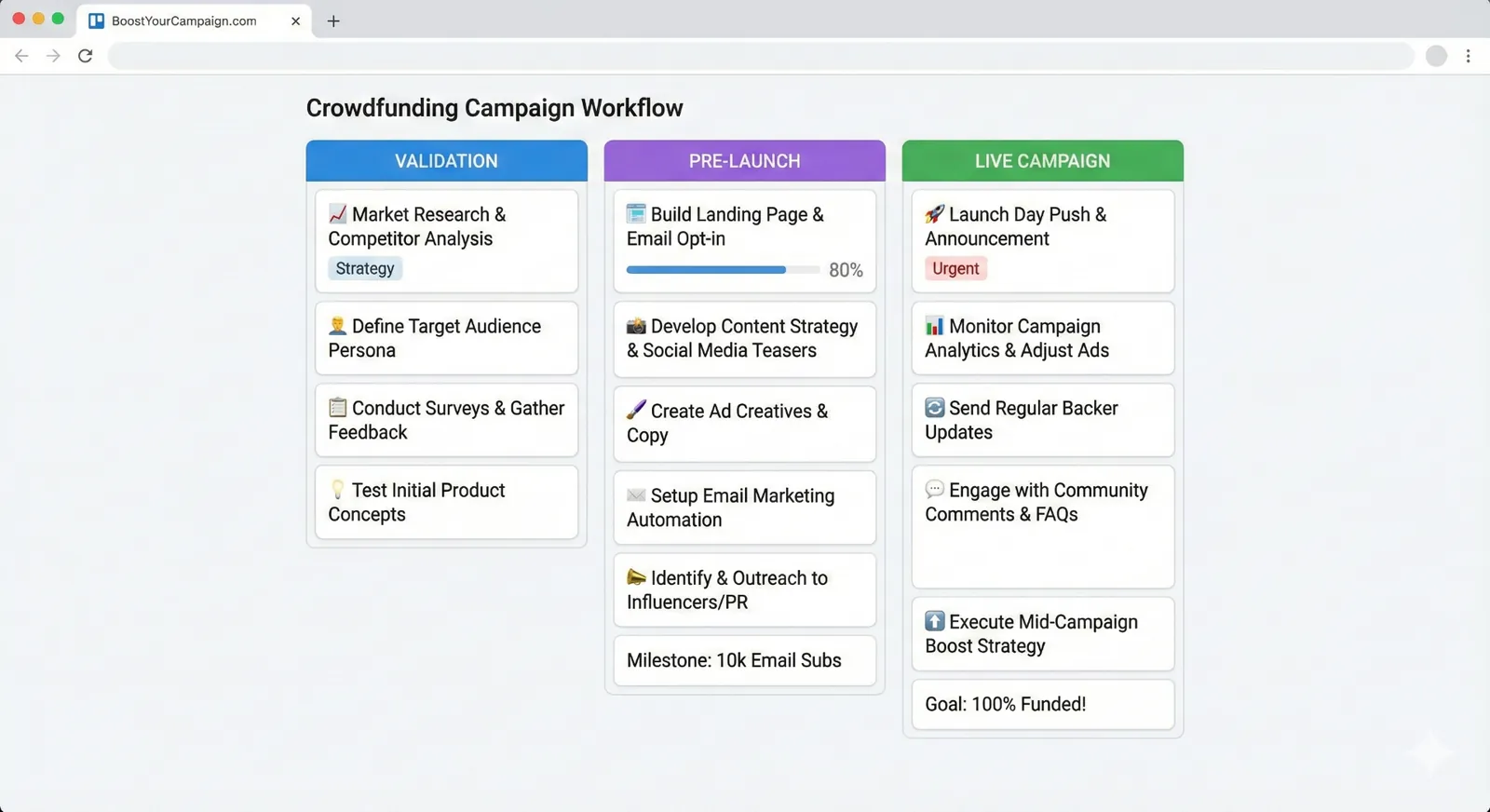
- Validation sprint design and execution
- Landing page structure and copy
- Ad account setup, creative strategy, and ongoing management
- Email flow planning for pre launch and live phases
- Daily or near daily monitoring of key numbers during the campaign
You still make decisions about product, margin, and goal. We bring the system that connects your product to backers in a predictable way.
For examples of how this played out in real projects, see the BoostYourCampaign case studies page.
Pre launch vs live campaign FAQ
How long should pre launch last
For most serious campaigns, a pre launch window of 8 to 12 weeks works well. Shorter periods are possible, but they reduce the amount of testing and list building you can do. When you reach out, we look at your date and tell you what is still realistic.
Can I launch without a pre launch phase
You can, but it raises the risk sharply. Without validation and a warmed list, you rely almost entirely on cold traffic and luck. We generally advise against skipping pre launch unless you already have a strong audience from another channel.
Should I keep running pre launch style ads after launch
Once you are live, most ad traffic should go directly to the campaign page or to a short path that leads there. In some cases we keep lead capture in place for later phases, but the main focus becomes backer acquisition, not list size.
How do I know if my pre launch numbers are good enough to launch
There is no single universal threshold, but we can look at your cost per lead, your email engagement, and your projected conversion to backers. If the numbers do not support your goal, we will say so clearly and outline options, including delay or scope changes.
Next step: plan your pre launch and live campaign structure
If you are planning a Kickstarter or Indiegogo launch and want these two phases handled with a clear system instead of guesswork, the next step is straightforward.
- Review how we work on the Kickstarter marketing services page
- Then share your product, margins, and target date through the contact form
We will look at your timeline, category, and numbers, then give you a direct view on what a realistic pre launch and live plan looks like for your campaign.
Ready to give your campaign the best shot?
We've helped 4,600+ creators raise over $734M since 2010. Let's pressure-test your launch plan and find the highest-leverage fixes before you go live.
Talk to an expert →