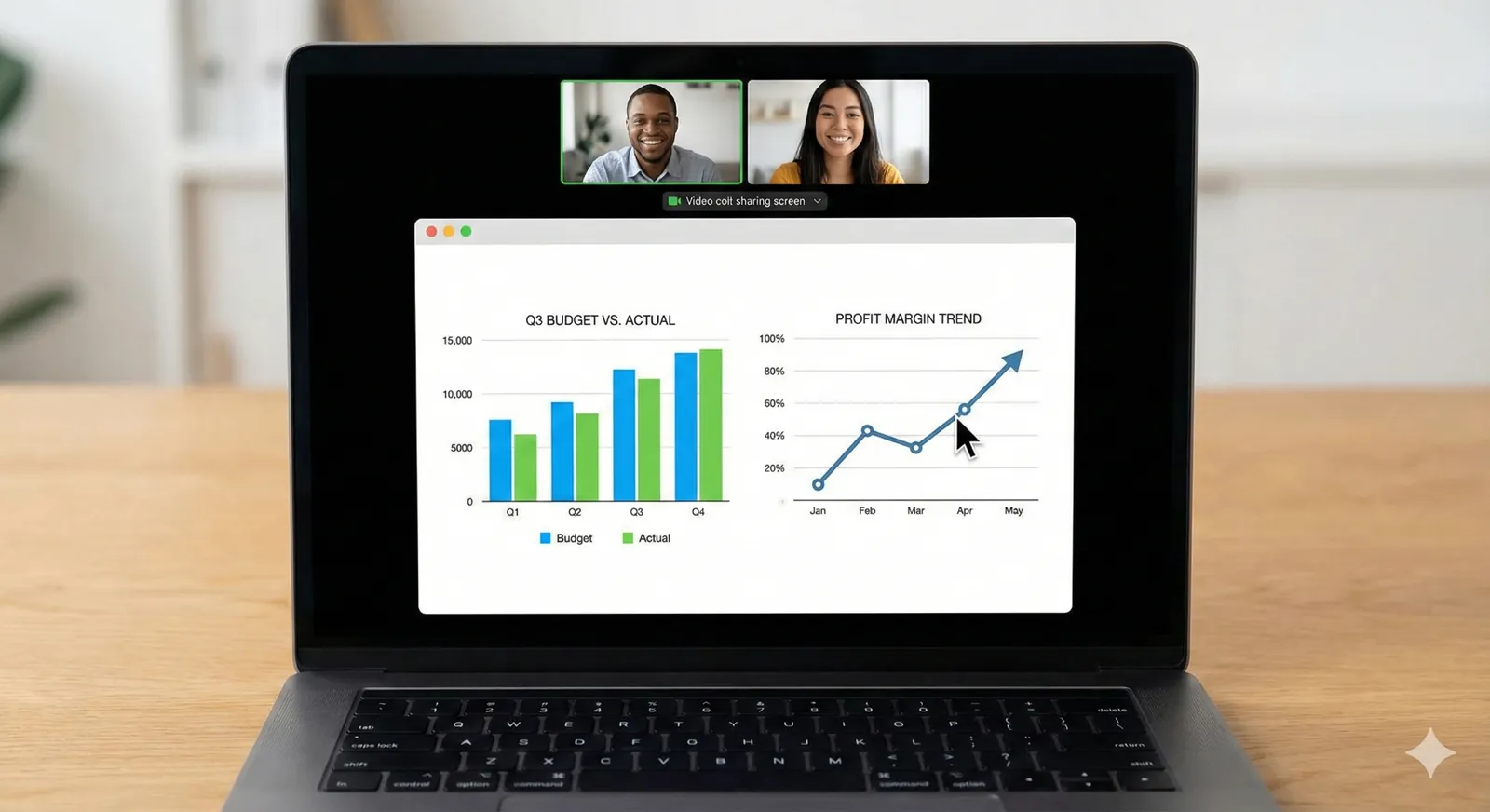
The two parts of your launch budget
Every serious crowdfunding launch has two main cost components:
- Professional fees for planning, creative work, ads, and funnel execution
- Ad budget to buy traffic and validate your offer before and during the campaign
Trying to save money by cutting one of these parts to the minimum is risky. A polished page without traffic will not fund. Traffic without structure wastes money. Pricing is about balancing both so the whole system has a fair chance to work.
Why we do not list one flat price for every project
A compact card game with a modest goal and simple logistics does not require the same scope as a complex hardware project with engineering content, high unit costs, and a long pre launch runway. Treating those as identical would be misleading.
Instead, we look at:
- Your product category and complexity
- Your target goal and margin per pledge
- How much groundwork is already done and what needs to be built
- Your risk tolerance and timeline
Based on that, we suggest a structure and a budget range that fits the actual work and the level of ambition.
Typical ways we structure professional fees
The structure is adapted to the project, but patterns repeat. Most engagements fall into one of these formats:
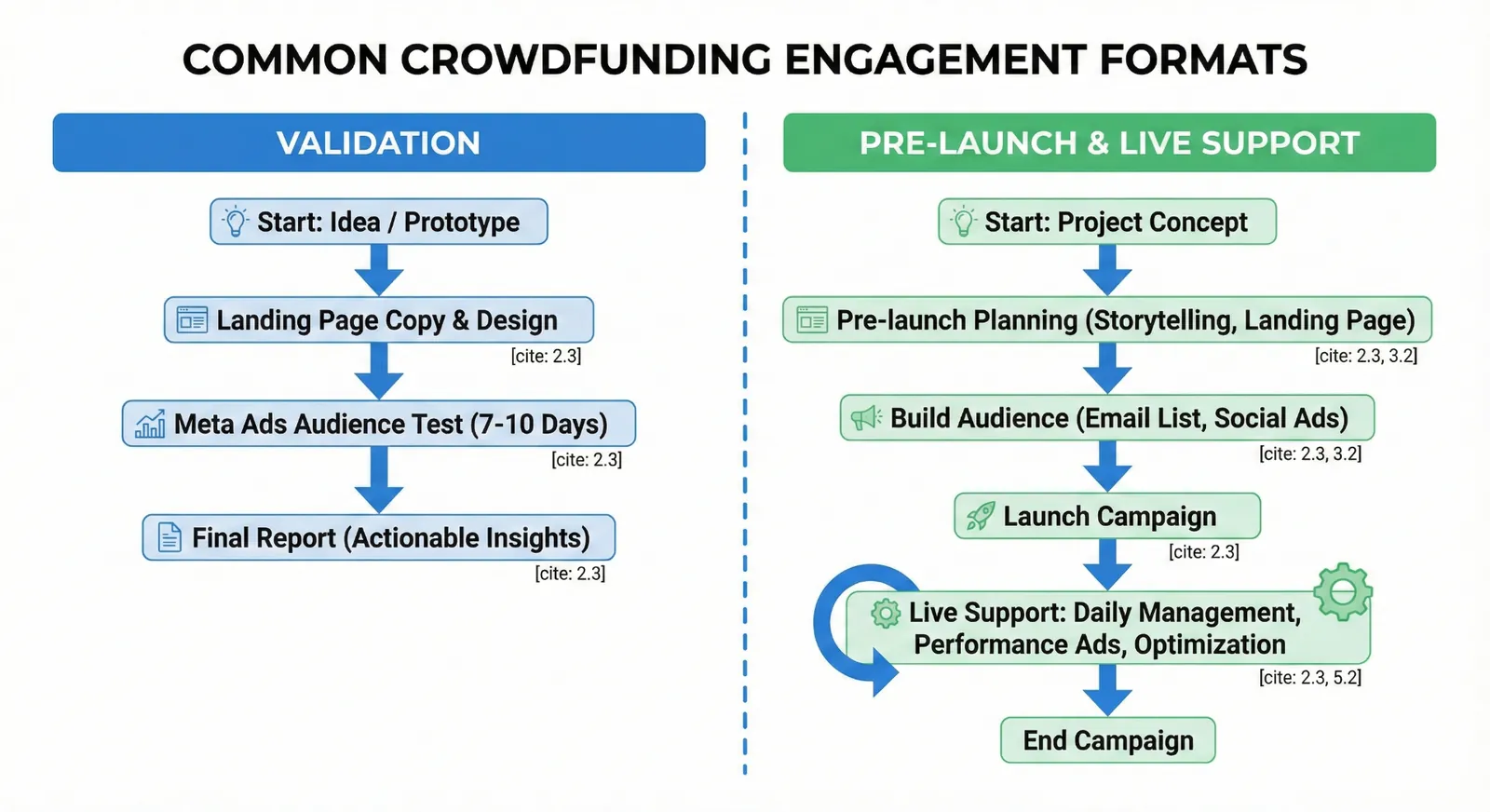
- Validation first engagement
A focused scope designed to test your offer before committing to full pre launch. Includes landing page, ad setup, initial creative angles, and a short, measured ad run. - Full pre launch and live campaign support
End to end work from validation through to the end of the campaign. Includes repeated creative cycles, systematic list building, email flows, and daily or near daily monitoring during the live phase. - Relaunch or rescue packages
For campaigns that have already launched or failed once. Scope focuses on diagnosis, offer repair, and a structured relaunch rather than repeating the same pattern with higher spend.
For some projects, we start with a stand alone validation phase. If the numbers are healthy, we then extend into full pre launch and live work under a second agreement.
How we think about ad budget
Professional fees only make sense if you can support them with a reasonable ad budget. The exact numbers change per project, but the principles are stable.
Your ad budget has to cover three stages:
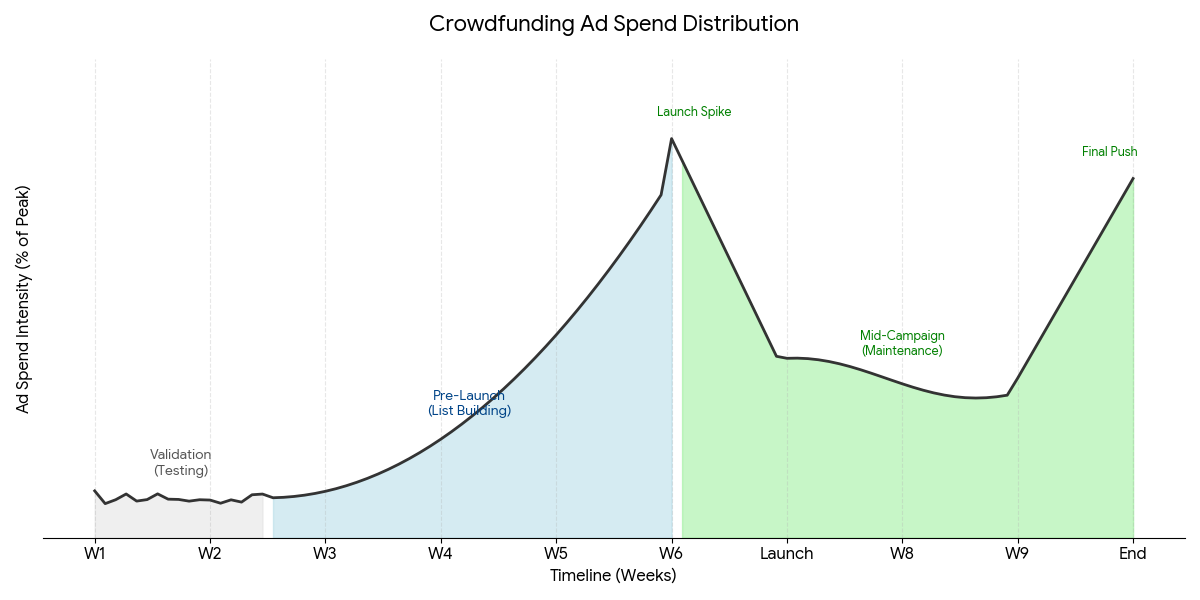
- Validation, where you find out if your offer can convert at all
- Pre launch list building, where you grow a warm audience that is ready to back
- Live campaign acquisition, where you turn that attention into pledges
Campaigns that try to validate, build a list, and fund with a very small ad budget carry a much higher risk. There is simply not enough data to make decisions or enough reach to create momentum.
The pre launch vs live campaign page explains how we spread budget across these phases.
Budget patterns you will recognise
Every project is unique, but certain budget patterns repeat. Examples include:
- Lean but serious launch
A smaller goal with a carefully controlled ad budget. The focus is on validation and hitting healthy early funding percentages, not on chasing a headline number at all costs. - Aggressive growth attempt
A project with strong validation numbers and a higher margin per pledge. Here it can make sense to commit more ad budget and test higher scaling levels once the campaign proves itself in the first days. - Stability first
Projects where production risk is significant. In these cases we often keep a tighter guard on spend even if demand looks good, so that the creator does not overextend beyond what they can confidently deliver.
None of these patterns are inherently better. The right one depends on your margin, your goal, and your appetite for risk.
Skin in the game: when we pay for ads
In some cases we use a structure where BoostYourCampaign pays for part or all of the ad spend and receives an agreed share of sales at the end of the campaign. This puts more of the media risk on our side and connects our upside directly to backer acquisition.
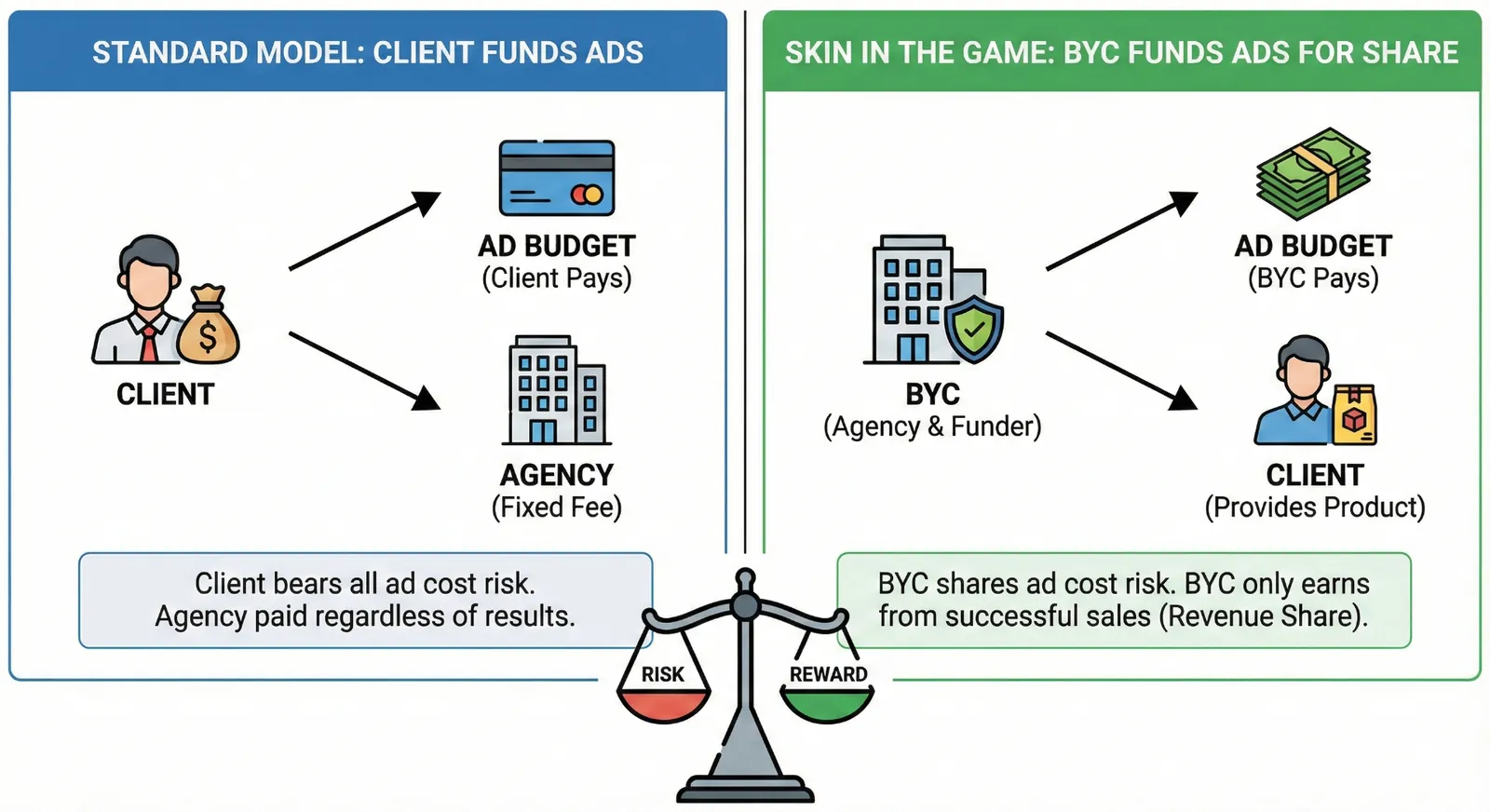
This model is reserved for situations where:
- Margins are clearly defined and strong
- The category has a track record of predictable response
- There is enough time for a proper validation phase before scaling
If we do not offer this structure for your project, it usually means the risk profile does not support it. In those cases, a straightforward fee plus ad budget approach is safer for both sides.
The legitimacy and risk page explains how this fits into the wider question of trust and alignment.
How we decide if a budget is realistic
On the first calls we do not just ask what you are willing to spend. We look at:
- Your cost of goods, fees, and shipping
- Your planned pledge levels and expected average pledge
- Your target goal and stretch targets
- Any existing audience or past campaign data
From there we can estimate a reasonable range for cost per lead and cost per backer and see whether your margin can support the required ad budget. If the numbers do not line up, the answer is not to hope for a miracle. The answer is to adjust the goal, the offer, or the budget.
When we feel that the budget or goal cannot be made realistic, we say so directly, even if that means not working together.
Questions to ask yourself before setting a budget
Before you ask for a quote from us or any agency, it is useful to have clear answers to a few questions:
- What is my true margin per unit after production, fees, and shipping
- How much am I willing to invest in validation, even if the answer is to delay
- Is my goal set at the minimum viable level, or at the level I would like to see
- What happens if the campaign funds, but at the lower end of my expectations
Having thought through these points makes budget conversations more concrete and keeps the focus on sustainable outcomes instead of best case numbers.
Pricing FAQ
Can you send a price list by email without a call
We can share typical structures and example ranges, but meaningful pricing always requires at least a short review of your product, margin, and goal. Otherwise the numbers are guesses.
Do you work on pure success fee
No. We do not take on projects where all compensation is tied to a final funding total without any base fee. The work involved in validation, creative, and daily campaign management is too significant to depend entirely on a single outcome metric.
Do you mark up ad spend
In standard models, ad spend is budgeted transparently and paid directly from your side into the platforms. Our fees cover the work of planning, building, and managing the campaigns. In skin in the game setups, we may temporarily pay for ads ourselves as part of the agreed structure, but the logic is discussed in detail before you sign.
What if we start and then discover the numbers do not work
The purpose of the validation phase is to find this out early. If results are clearly below healthy ranges after serious testing, we will advise against scaling and outline options. In some cases that leads to a pause or a change in scope rather than continuing with the original plan.
How do I compare your pricing to other agencies
When you compare, look at what is actually included in the work, who runs the ads, who writes the copy, and how decisions are made during the live campaign. A low headline fee can be expensive if the structure around it is weak. A higher fee can be efficient if it comes with discipline and clear decision making.
Next step: get a pricing range for your campaign
If you want a concrete pricing structure for your project, the next step is straightforward.
- Review the overall system on the BoostYourCampaign review page
- Look at how we work day to day on the Kickstarter marketing services page
- Then use the contact form to share your product, margins, and target goal
We will review your information and give you a clear view on fee structure, ad budget ranges, and what kind of outcome band is realistic for your situation.
If you want to see how this felt for other creators, you can also read comments on our BoostYourCampaign reviews page.
Ready to give your campaign the best shot?
We've helped 4,600+ creators raise over $734M since 2010. Let's pressure-test your launch plan and find the highest-leverage fixes before you go live.
Talk to an expert →