
What "Kickstarter marketing" really means in 2026
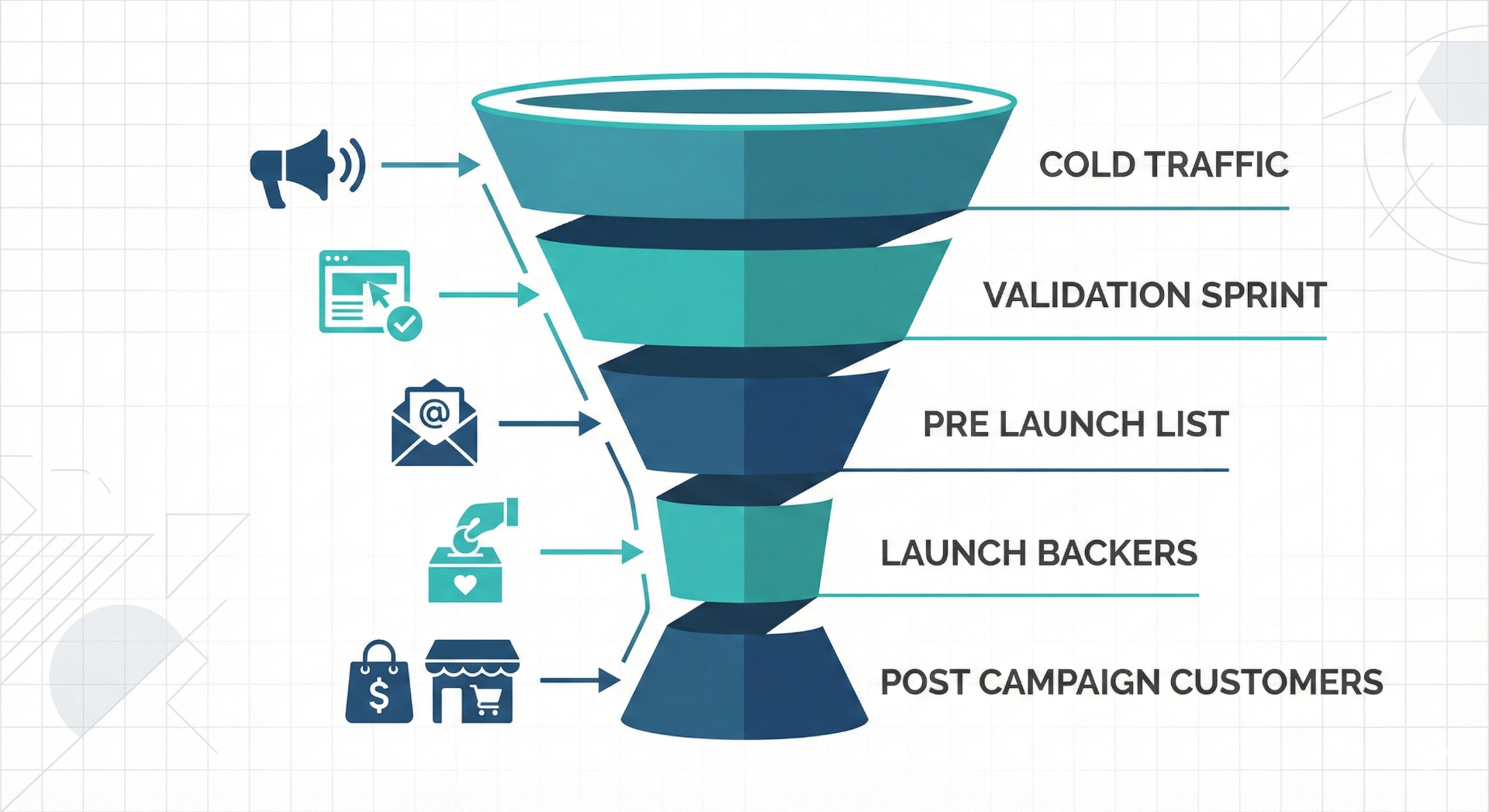
The phrase "Kickstarter marketing" covers a wide range of work. In practice it usually means a full funnel, from the first time someone sees your product to the moment they back and beyond. The exact mix changes by project, but the main components stay fairly stable.
Main components of a modern Kickstarter marketing funnel
- Product and offer validation before large spend
- Pre launch audience building and list growth
- Campaign page copy, structure, and creative assets
- Paid traffic from Meta and other platforms
- Email sequences from first signup to late campaign push
- Social, PR, and sometimes influencer support
- Live campaign optimisation and daily decision making
- Post campaign transition to ecommerce or InDemand
The details look different for a tabletop game, a design object, or a piece of hardware, but the sequence is similar. Campaigns that try to skip entire stages usually pay for it when the page goes live and the numbers do not move.
Start with the foundations: product, numbers, and fit
No marketing system can fix a product with weak margins or no clear audience. Before thinking about ads or landing pages, it is worth checking a few basics.
Check your unit economics
- Cost of goods, including packaging, freight, and platform fees
- Target pledge levels and expected average pledge
- Realistic ad cost per acquisition range for your category
A common pattern is a beautiful product with a very tight margin. Any serious ad spend then eats most of the profit. An honest marketing partner will raise this early and help you adjust price or positioning, or recommend that you do not scale yet.
Clarify who you are building for
Kickstarter still has strong pockets of demand in games, hardware, and design. Each comes with its own expectations. Board game backers care about gameplay depth, stretch goals, and component quality. Hardware backers focus on risk, delivery, and proof that the team can ship. Design backers pay attention to aesthetics, story, and social proof.
A clear target backer profile makes every later decision simpler: which angles to test, which visuals to create, which communities to join, and which publications to pitch.
Set goals that match reality
Funding goals are not just a wish list. They interact with trust and conversion. A goal that is too high can create doubt. A goal that is too low can cause cash flow problems if you actually hit it. A structured planning session, either internal or with a specialist, should cover:
- Minimum viable goal that keeps you safe
- Comfortable stretch range with clear assumptions
- Ad budget ranges that can support these numbers
Phase 1: validation and early audience testing
Many creators now run a validation phase before they commit to a full pre launch and large ad budgets. The goal is simple: find out if there is a path to acquire leads and backers at a cost that fits your margin.
Minimal but sharp setup
- A focused landing page or simple reservation page
- Two or three clear value propositions, not ten
- A small set of ad angles on Meta, aimed at well defined audiences
During this sprint you are not trying to "scale". You are trying to answer a few questions quickly:
- Can you attract qualified clicks at a reasonable cost
- Do visitors care enough to sign up or reserve
- Which angles and visuals get traction
At BoostYourCampaign this looks like a short, controlled test with clear thresholds. If the numbers are far off, the honest move is to adjust offer or timing rather than push more budget. For a deeper breakdown of ad thinking by channel, see Kickstarter ads in 2025.
Phase 2: pre launch list building and warm up
Once basic validation looks healthy, the work shifts to building a real audience before launch. This phase has a direct impact on the first 48 hours of the campaign.
Landing pages and reservation funnels
A typical setup combines:
- A main landing page that explains the product clearly and collects email leads
- Optionally, a low friction reservation funnel where people place a small deposit for access to the best launch price
- Email tools that tag and segment people based on actions
Reservation funnels often convert at a lower rate than simple opt in pages, but they give you a much stronger signal of intent. Someone who paid a small amount before launch is far more likely to become a backer when the page goes live.
Paid traffic and creative testing
During pre launch, paid traffic is mostly used for list building. The focus is not on direct backer acquisition yet. Key levers include:
- Systematic testing of hooks and creatives on Meta
- Adjusting landing page elements based on observed behaviour
- Tracking cost per lead and quality signals such as reply or reservation rates
For many campaigns this is where most of the marketing budget is spent, because what you learn here feeds not only the launch but also post campaign ecommerce.
Email warm up and community building
An email address collected six weeks before launch is not very valuable if you stay silent until launch day. A simple but consistent warm up plan goes a long way:
- Short story emails about the product and the making process
- Small polls that invite replies and interaction
- Clear timelines and what people can expect at launch
Campaigns that treat pre launch subscribers as a real community instead of a list of addresses tend to see stronger early conversion.
Phase 3: campaign page and creative assets
A strong pre launch can be wasted if the campaign page is confusing or hard to trust. Page and asset work is a full project on its own.
Structuring the page
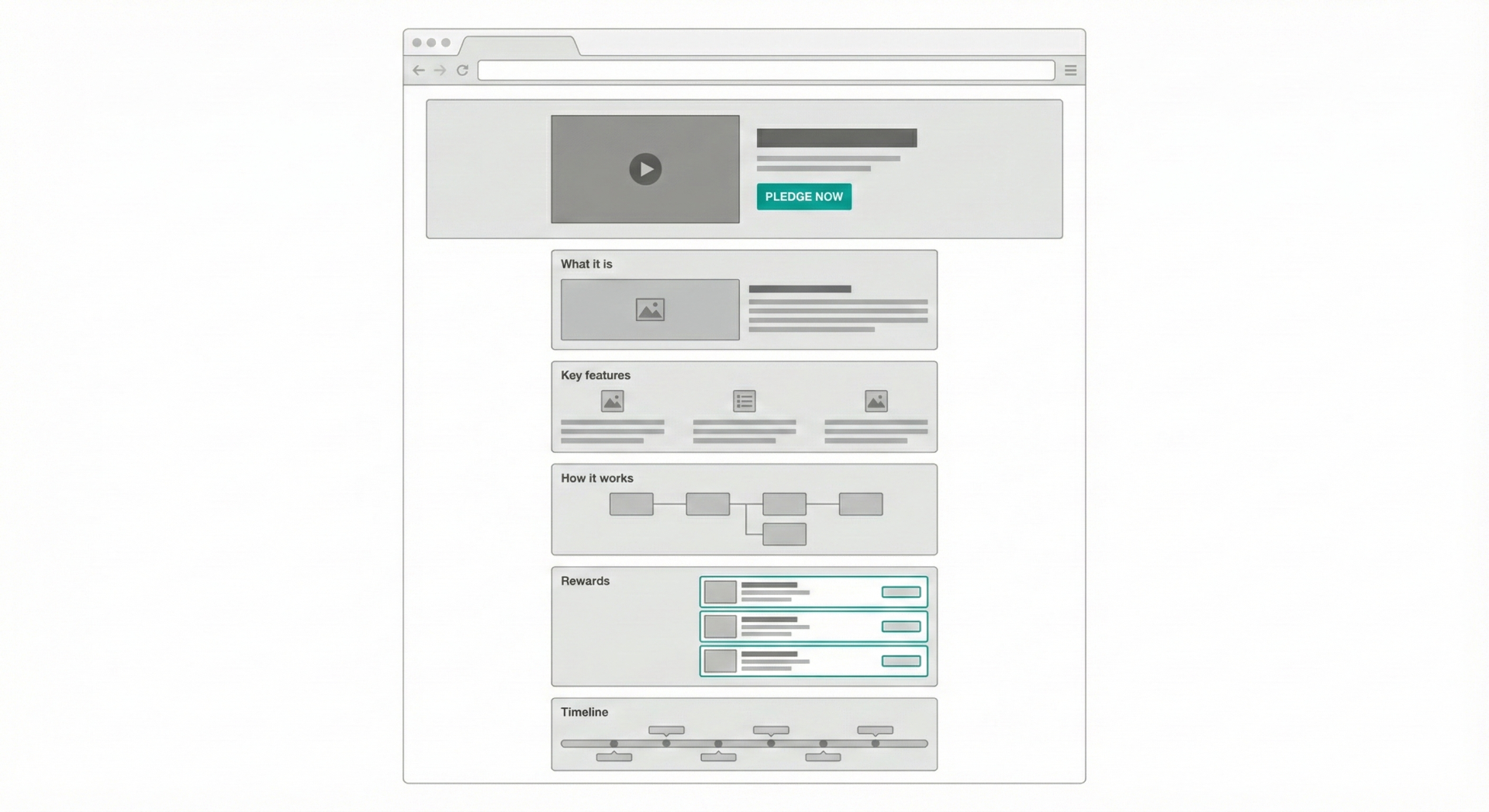
Most successful pages follow a clear structure:
- Sharp headline and sub headline that explain the core benefit
- A clear hero visual or short video that shows the product in context
- Section that explains what it is and who it is for
- Proof that the product is real, with prototypes, tests, or demos
- Details on rewards, add ons, and stretch goals if relevant
- Delivery timelines and a simple, honest risk section
The goal is not to be clever. The goal is to help a visitor understand quickly and feel safe supporting the project.
Video, photography, and graphics
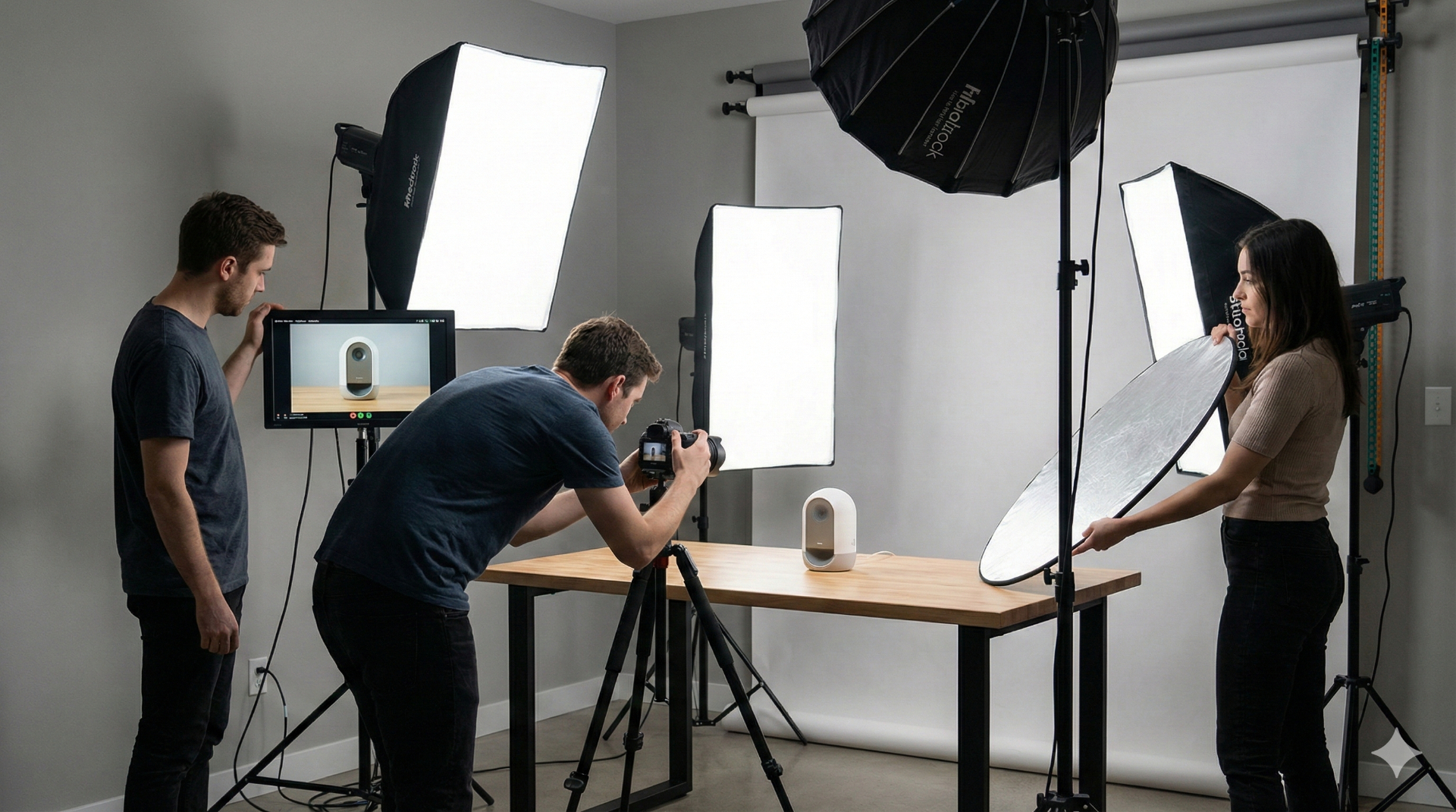
Visual quality is now a basic expectation rather than a bonus. That does not always mean a huge production, but it does mean:
- Clear shots that show the product from all necessary angles
- Real life use cases instead of only renders
- Graphics that explain key features without clutter
If you do not have a local team for this, a specialised partner can help. BoostYourCampaign, for example, works with an internal video studio for campaigns that need support with Kickstarter video and product photography rather than only ad assets.
Copy that matches real backer questions
Many pages fall into marketing slogans that do not answer what backers actually care about. Good copy tracks their questions in order:
- What is this product
- Why would I use it instead of something I already have
- Can this team deliver
- How exactly does backing work here
A simple way to improve copy is to read through comments and messages from your pre launch list and let those phrases shape the content.
Phase 4: launch day and the first 72 hours
Kickstarter still rewards early momentum. Strong performance in the first few days can improve visibility through internal discovery, recommendations, and category pages. That does not mean chasing tricks. It means organising your existing interest so it shows up early.
Planned launch communications
By the time you launch, your schedule for the first three days should already exist. Typical building blocks:
- Launch email to your main list
- Targeted email to reservation holders or most engaged subscribers
- Coordinated social posts across your main channels
- Messages to partners and collaborators who can share
Ad campaigns often switch from pure lead generation to a mix of list retargeting and colder traffic pointed directly at the Kickstarter page.
Handling traffic and feedback
The early days bring a lot of signal. You will see which segments convert, which questions appear in comments, and where confusion still exists on the page. Quick but thoughtful updates and small tweaks to copy or visuals can help remove friction without destabilising the story.
Phase 5: live campaign optimisation and mid campaign plateaus
Very few campaigns grow in a straight line. Most have a strong start, a quieter middle, and a final push. Marketing work during the live phase focuses on keeping the middle healthy and avoiding avoidable drops in confidence.
Watching the right metrics
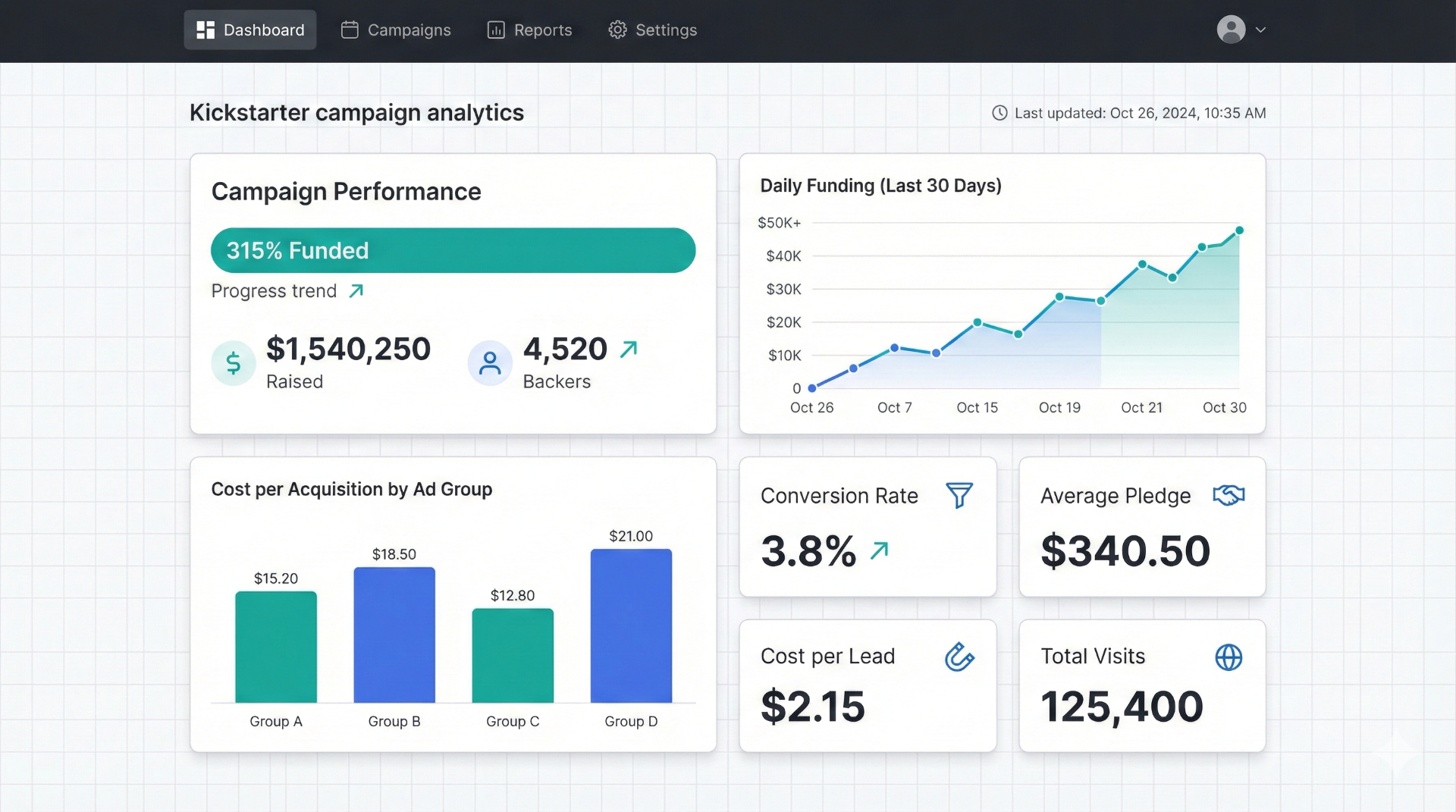
During the live phase, useful metrics include:
- Conversion rate from visit to backer on the Kickstarter page
- Cost per acquisition for each main ad group
- Average pledge value by traffic source
- Daily funding pace compared to your minimum and stretch goals
A data driven team will cut underperforming ad sets quickly, reinvest in what is working, and keep a buffer so that you do not burn your entire budget too early or too late.
Updates, stretch goals, and community management
Updates are not just status messages. They affect both existing backers and people who are still deciding. Effective updates:
- Show real progress instead of generic enthusiasm
- Answer common questions in public
- Introduce any stretch goals carefully with clear impact on timelines
Constant stretch goal changes with no explanation can create doubt. A measured approach with clear rationale helps more than a long list of unlocked extras that strain production.
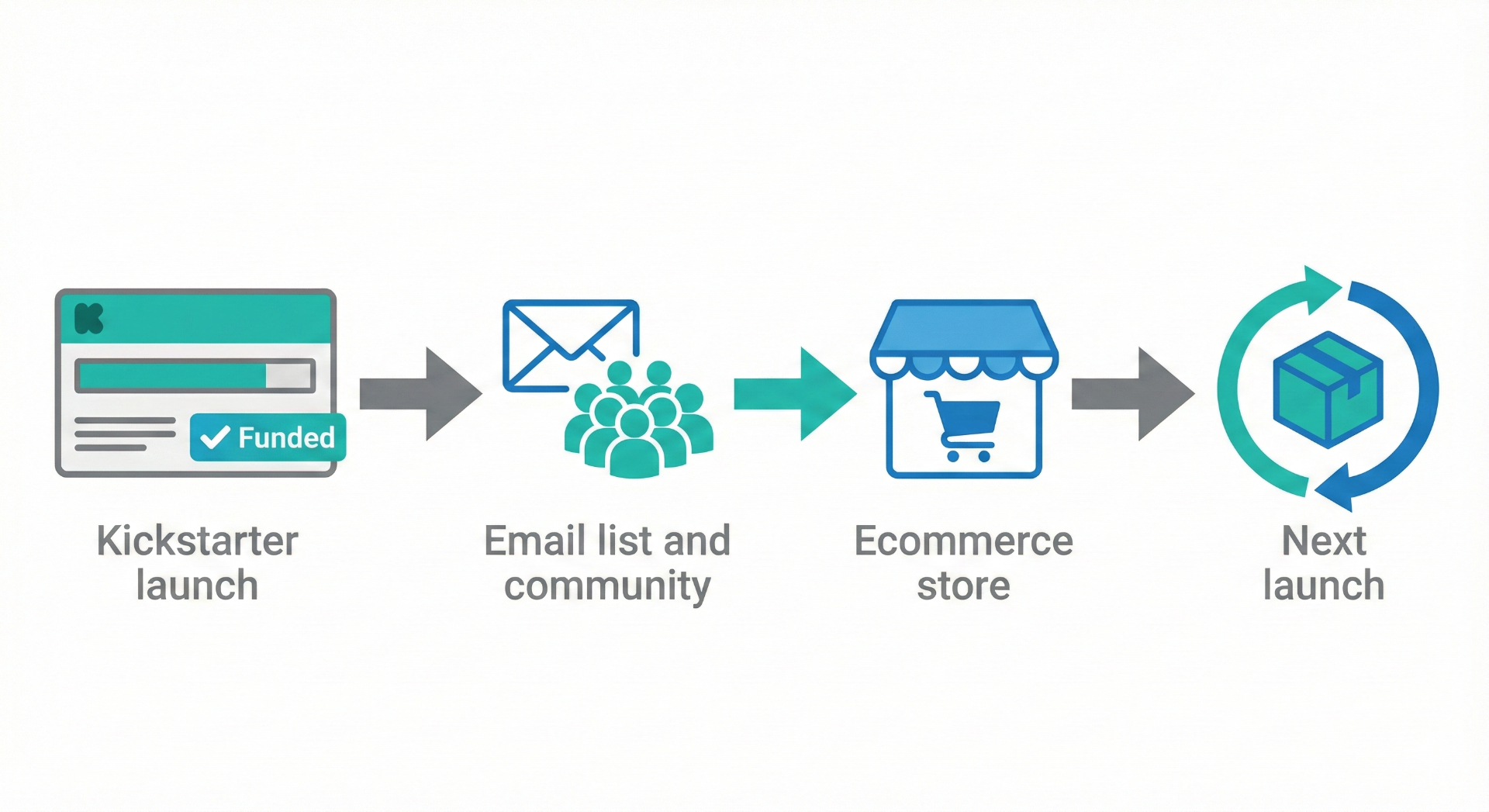
Phase 6: after the campaign and long term marketing
A funded Kickstarter campaign is often the start of the real work rather than the end. The choices you make during the campaign affect what you can do after it closes.
From Kickstarter to ecommerce or retail
The email list, ad audiences, and creatives you built for Kickstarter also form the basis of your later marketing stack. After delivery many teams:
- Move to a direct store on platforms such as Shopify
- Continue to run ads based on proven angles
- Use Kickstarter backers as a seed audience for lookalikes
Launching with long term plans in mind avoids awkward gaps between campaign and regular sales.
Using data from the first launch for the next one
Brands that run several campaigns have a major advantage. They carry learning forward instead of starting at zero every time. This was one of the reasons large campaigns such as Everyday Bags, Baltic watches, or Luna were able to scale across multiple launches with consistent momentum.
Structured reporting, which you can see described on the BoostYourCampaign review page, is what makes these lessons reusable instead of buried in old ad accounts and spreadsheets.

How to choose a Kickstarter marketing partner
Some creators run most of this process themselves. Others bring in freelancers for specific tasks. Many serious projects now choose a specialist agency to handle the full funnel. The right choice depends on your skills, time, and risk tolerance.
What to look for
- Real track record with funded projects in your category
- Clear explanation of process from validation to post campaign
- Transparent fees and a realistic view on ad budgets
- Access to the people who will actually run your account
- Ability to support missing pieces such as video or product photos
It is also worth checking how they handle projects that do not go as planned. A transparent reviews page such as BoostYourCampaign reviews often reveals more than polished case studies alone.
Questions to ask on a first call
- What does a typical engagement look like for a product like mine
- How do you decide when a campaign is ready to scale ad spend
- Which metrics matter most to you at each stage
- How do you communicate day to day during the live campaign
- What kind of budget range have you seen work for similar projects
For a detailed breakdown of how one agency approaches this, see the BoostYourCampaign review, the section on case studies, and the explanation of BoostYourCampaign pricing.
When it makes sense to work with BoostYourCampaign
BoostYourCampaign focuses on done for you Kickstarter and Indiegogo marketing, from validation to live campaign scaling. The team has worked on more than 4,500 launches across games, hardware, and design.
The fit is best when:
- You have a serious product with clear value and a defined audience
- You can commit a marketing budget of at least 4,500 dollars for proper testing and scaling
- You want a partner that runs the full funnel instead of sending templates
- You prefer clear reporting and direct, honest feedback
If you are still at idea stage, BoostYourCampaign can sometimes help through its MVP service, which focuses on validating software ideas and early stage concepts before a full crowdfunding push.
For a structured list of what is included, read the dedicated Kickstarter marketing services page.
Kickstarter marketing FAQ
Next step: plan your Kickstarter marketing for 2025
If you are preparing a launch and want to understand whether your product and budget are ready for a serious Kickstarter push, you can start with a simple step.
- Read the Kickstarter marketing services overview for a clear view of how a full engagement looks
- Visit the BoostYourCampaign review page for a transparent breakdown of process, results, and pricing
- Then fill out the contact form and share a few details about your project
From there you can expect a direct assessment of what is realistic for your campaign and whether BoostYourCampaign is the right partner to run the marketing work with you.