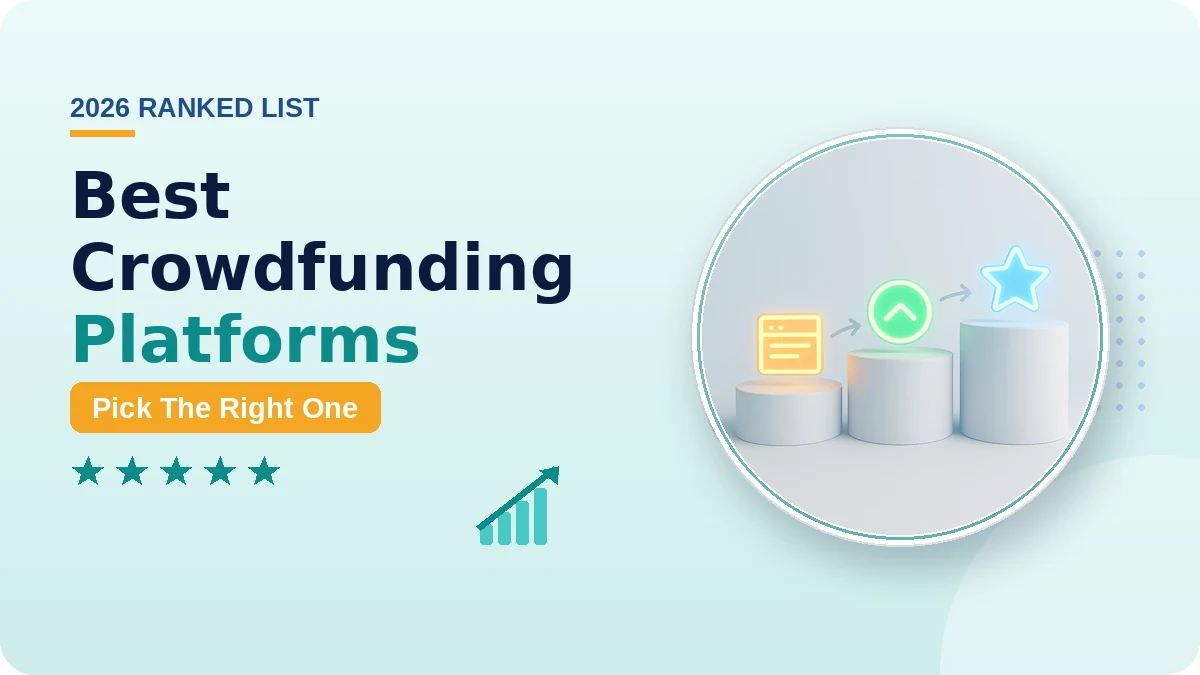
For most physical product launches, Kickstarter is the best crowdfunding platform in 2026 - it has the strongest organic discovery for creative and consumer products and an all-or-nothing model that protects you from being underfunded. Indiegogo, which now also runs fixed, all-or-nothing funding only, is the better fit for hardware wanting continued post-campaign sales through Late Pledge (formerly InDemand). GoFundMe fits personal causes and donations, not product launches. The right platform depends on what you're funding, not which one is most well-known.
Picking a platform is one of the first real decisions in a crowdfunding launch, and creators often default to "whichever one I've heard of" without weighing what actually differs between them. The platforms aren't interchangeable - they have different discovery mechanics, different funding models, and different audiences already primed to back different kinds of projects. Here's an honest ranking for product launches specifically, not a generic "crowdfunding sites" list that lumps in donation platforms with product pre-order platforms.
- Kickstarter - strongest organic discovery for creative and consumer products
- Indiegogo - best for continued sales after launch via Late Pledge
- GoFundMe - best for personal causes and donations, not products
- Fundly - best for community and charity-driven fundraising
- Equity crowdfunding platforms (Wefunder, StartEngine, Republic) - for startups raising capital, not pre-selling
The best crowdfunding platforms for product launches
Kickstarter
Best for: creative and consumer products - games, design objects, tech, publishing - where a defined backer community already exists and organic discovery can genuinely help.
Kickstarter is the largest reward-based crowdfunding platform and has the strongest built-in discovery for creative categories, particularly games, design, and tabletop, where backers browse and discover new projects habitually. Its all-or-nothing funding model means backers are only charged if you hit your goal, which builds trust and protects you from launching underfunded. The trade-off: strict eligibility and category rules, and once live, your funding goal and deadline are locked - no changing them mid-campaign. For most physical product creators, Kickstarter is the default starting point, and for good reason.
2. Indiegogo
Best for continued sales after launch
Since Indiegogo's October 2025 move to its Gamefound-powered platform, new campaigns run fixed, all-or-nothing funding only - the flexible-funding option (keeping what you raise even below goal) is discontinued. Its Late Pledge feature (formerly called InDemand) lets a campaign keep accepting pledges after the official campaign period ends, functioning as an ongoing storefront. This makes it a strong fit for hardware creators who plan to keep selling well past the initial campaign window. Indiegogo's organic discovery is generally considered weaker than Kickstarter's, meaning you'll lean more heavily on your own pre-launch list and paid traffic regardless of which platform you choose. Our Late Pledge guide covers this feature in depth.
3. GoFundMe
Best for personal causes and donations, not products
GoFundMe is built for donation-based fundraising - medical expenses, community causes, personal emergencies - not rewards-based product pre-orders. It lacks the reward-tier infrastructure, backer discovery tools, and product-launch-focused audience that Kickstarter and Indiegogo offer. If you're funding a physical product with rewards to offer, GoFundMe is very rarely the right platform; it belongs on this list mainly because creators sometimes confuse it with product crowdfunding platforms and shouldn't.
4. Fundly
Best for community and charity-driven fundraising
Fundly focuses on team and community fundraising - nonprofits, schools, personal causes - with tools built around social sharing and peer-to-peer fundraising rather than product reward tiers. Like GoFundMe, it's a donation-style platform rather than a rewards-based product launch platform, worth knowing about but not a fit for a physical product pre-sale.
5. Equity crowdfunding platforms (Wefunder, StartEngine, Republic)
Best for startups raising capital, not pre-selling a product
These platforms handle equity crowdfunding - backers become investors receiving company shares rather than a product - and operate under securities regulations that rewards platforms don't. They fit founders raising capital to build a company rather than fund one production run of a finished, sellable product. See our types of crowdfunding guide for the full distinction between rewards and equity crowdfunding.
| Platform | Funding model | Best for |
|---|---|---|
| Kickstarter | All-or-nothing only | Creative and consumer products, strongest organic discovery |
| Indiegogo | All-or-nothing only (fixed) | Hardware, continued sales via Late Pledge |
| GoFundMe | Donation-based | Personal causes, not products |
| Fundly | Donation-based | Community and charity fundraising |
| Equity platforms | Securities offering | Startups raising capital, not pre-selling |
Regional and niche platforms worth knowing about
Beyond the major names, a handful of smaller platforms fit specific situations well enough to be worth knowing rather than defaulting past. Makuake serves the Japanese market specifically and can be a genuinely better first stop for a product with strong appeal to Japanese consumers, since it comes with local payment methods and audience trust that Kickstarter's Japan presence doesn't fully replicate. Ulule has meaningful traction across parts of continental Europe and can supplement a Kickstarter launch for creators specifically targeting French, Belgian, or other European backer bases. Seed&Spark focuses on film and media projects with tools built around that audience specifically. None of these should replace Kickstarter or Indiegogo as your primary platform for a mainstream product launch, but if a meaningful share of your realistic backer base sits in one of these regions or niches, it's worth at least evaluating alongside the majors rather than assuming the biggest platform automatically wins for your specific audience.
Can you switch platforms if your first choice isn't working?
Mid-campaign, no - once you're live on a platform, you're committed to seeing that specific campaign through, since backers, comments, and momentum are all tied to that one listing. What creators sometimes do instead is relaunch on a different platform after a failed or underperforming first attempt, treating the first campaign as market research: what messaging resonated, what price points backers balked at, what questions came up repeatedly in comments. A relaunch on a different platform, done with those lessons applied and a properly rebuilt pre-launch list, is a legitimate strategy - but changing platforms alone rarely fixes a campaign that failed for reasons unrelated to platform choice, like a weak page, no pre-launch list, or an unrealistic goal.
How to actually choose
Start with what you're offering backers, not with which platform name you recognize. If backers get the physical product itself, you're choosing between Kickstarter and Indiegogo, and since both now run the same fixed, all-or-nothing funding model, the decision usually comes down to which has the stronger organic discovery for your category (Kickstarter) versus which offers the post-campaign Late Pledge sales tools you want (Indiegogo). If backers get equity, you're on a securities platform, a different conversation entirely. If there's no reward at all, you're not really doing product crowdfunding - GoFundMe or Fundly fit that case, not this list. Our full Kickstarter vs Indiegogo vs GoFundMe comparison goes deeper on the trade-offs for product creators specifically.
If you are weighing equity crowdfunding vs reward-based crowdfunding, that decision comes before platform choice - and startup founders comparing both routes can use our dedicated guide to the best crowdfunding platforms for startups.
Frequently Asked Questions
What is the best crowdfunding platform for a product launch in 2026?
Kickstarter is the best overall choice for most physical product launches, thanks to stronger organic discovery in creative and consumer categories and an all-or-nothing model that protects you from launching underfunded. Indiegogo, which also runs fixed, all-or-nothing funding for new campaigns since October 2025, is the better fit specifically for hardware wanting continued sales after the campaign through Late Pledge (formerly InDemand). The right answer depends on your product and goals, not platform popularity alone.
Should I use Kickstarter or Indiegogo?
Choose Kickstarter if you want stronger organic discovery, an all-or-nothing model, and you're launching a creative or consumer product in a category with an established backer community, like games or design. Choose Indiegogo if you plan to keep selling after the campaign through Late Pledge, or your product doesn't fit neatly into Kickstarter's stricter category rules. Both platforms now use the same fixed, all-or-nothing funding model.
Is GoFundMe good for launching a product?
Generally no. GoFundMe is built for donation-based fundraising around personal causes, not rewards-based product pre-orders, and it lacks the reward-tier tools and product-focused backer base that Kickstarter and Indiegogo offer. For a physical product with rewards to offer backers, a dedicated rewards crowdfunding platform is almost always the better fit.
Which platform has the lowest fees?
Fee structures change over time and should be checked directly on each platform before committing, but Kickstarter and Indiegogo both typically charge combined platform-and-processing fees in the 8 to 10 percent range for standard rewards crowdfunding. Some newer creator platforms advertise lower fees but generally lack the discovery infrastructure and backer trust that make Kickstarter and Indiegogo effective for a real product launch.
Are there good crowdfunding platforms outside Kickstarter and Indiegogo?
A few fit specific situations well: Makuake for products with strong appeal in the Japanese market, Ulule for creators targeting European backer bases, and Seed&Spark for film-specific projects. These are worth evaluating alongside the majors when a meaningful share of your audience sits in that region or niche, but they generally shouldn't replace Kickstarter or Indiegogo as the primary platform for a mainstream product launch.
Can I switch platforms if my campaign isn't performing?
Not mid-campaign - you're committed to the platform you launched on for that specific attempt. What works is treating an underperforming campaign as research, then relaunching later with lessons applied: better messaging, adjusted pricing, a properly rebuilt pre-launch list. Just switching platforms without fixing the underlying issue - usually a weak page, no warm list, or an unrealistic goal - rarely changes the outcome on its own.
The platform matters less than most creators think - your pre-launch list, your page, and your ad discipline decide the outcome far more than which logo is at the top of the page. Pick the platform that fits your funding model and category, then put the real effort into the parts that actually move the needle. If you want help deciding which platform fits your specific product, book a free strategy call.
Want results like these for your campaign?
We've helped 4,600+ creators raise over $734M. Let's pressure-test your launch plan and find the highest-leverage fixes before you go live.
Book a free strategy call →Get the free 87-step launch checklist
The exact pre-launch, live-campaign and fulfillment steps we use across 4,600+ launches. Free PDF, emailed instantly.
You're in - check your inbox. Open the checklist now ->